Book Week in the age of AI
Observations from a travelling author in Book Week 2025, where generative-AI is robbing children of their imaginations right before our eyes ...

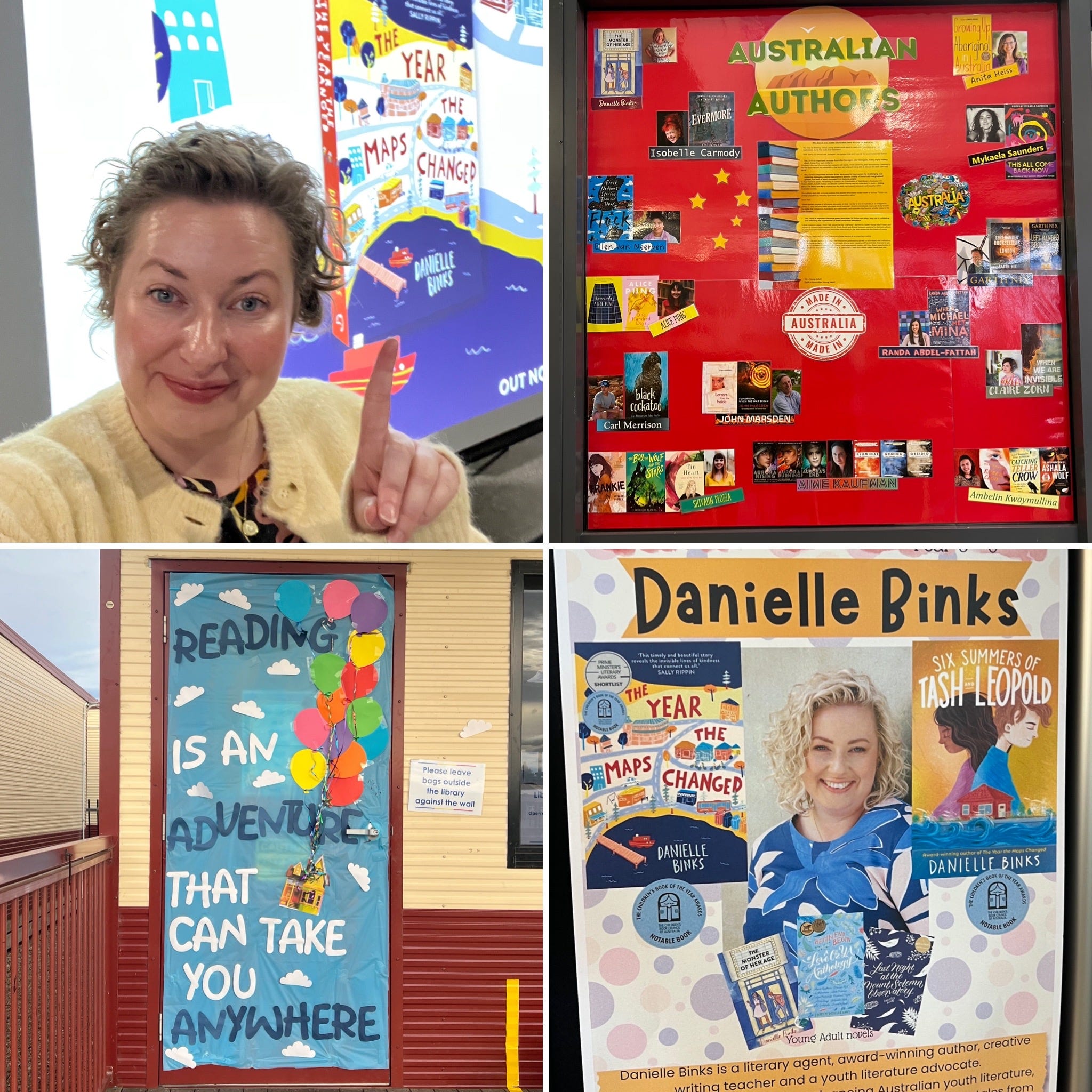
Every year, we have Book Week - organised by the Children’s Book Council of Australia (CBCA) - it is the “key highlight national event of the year,” for the organisation. And 2025 was a particularly big one, because; “we celebrate 80 years of Children’s Book Week! For 8 decades, CBCA has been dedicated to inspiring young minds to journey through the countless worlds that books offer.”
I am a children’s author, and Book Week is by far my busiest time - for all of us who work with young people, we’re touring schools and putting on workshops, book talks, all manner of fun activities celebrating books, writing, illustration, imagination and adventure!
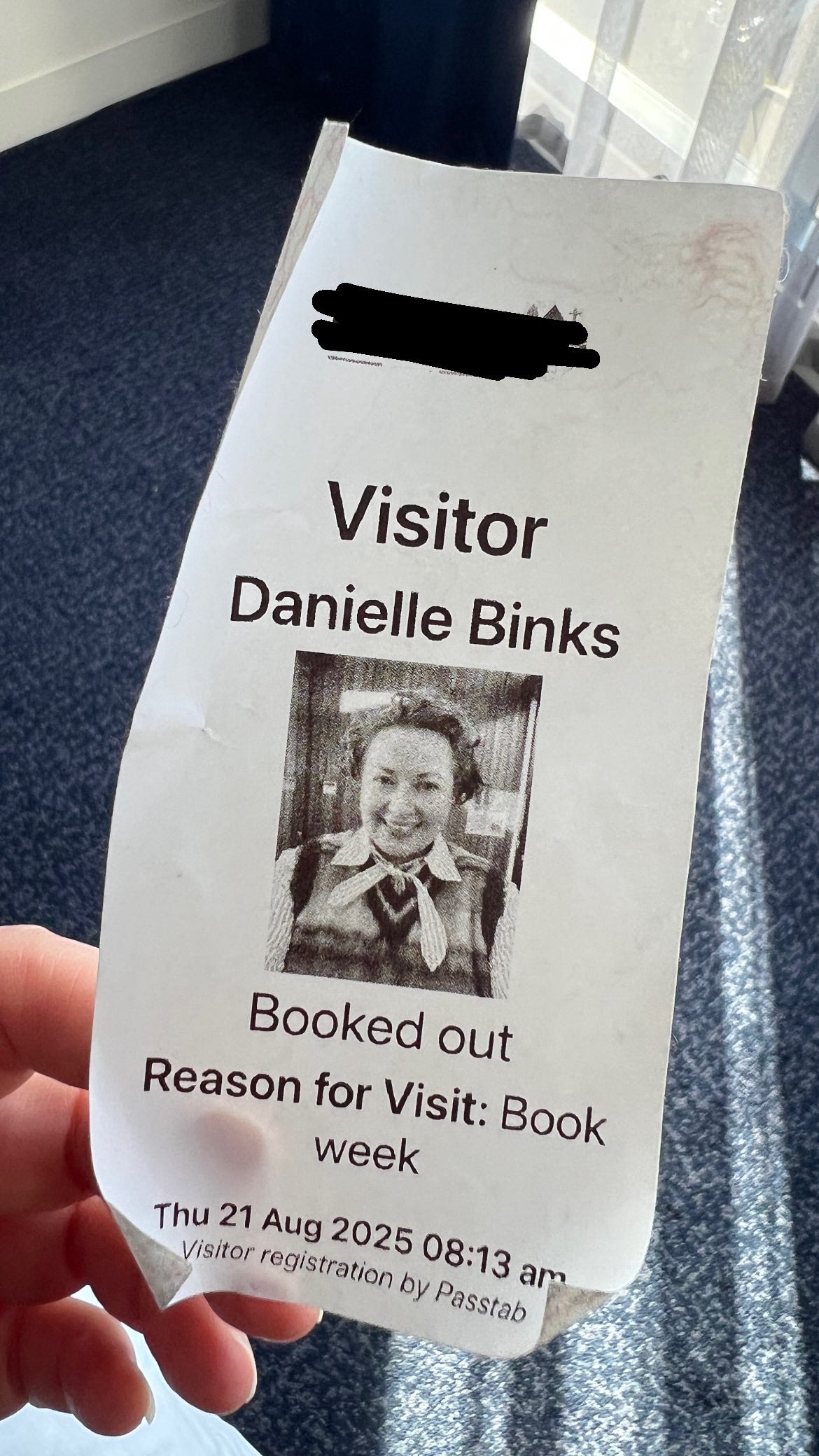
I always have a wonderful (if tiring) time over Book Week, as I often travel quite far and stay in hotels, touring on the road and living out of a suitcase. But it’s always worth it, not just because it’s often the time when creators generate their most freelance income (most Australian authors haven’t earned a living wage from sale of their published books for a long time) but more than that it’s wonderful to get out and actually meet our readers! By far the best part of the job is getting to meet young people and celebrate the importance and joy to be found in the pages of a good book.
… but if I am being honest; this Book Week was different.
Change is in the AIr
My first book was a short-story collection I edited and contributed to, celebrating Aussie Young Adult literature (Begin, End, Begin: A #LoveOzYA Anthology) it came out in 2017, and that’s when I started being booked by schools and crafting author talks. My first solo-novel (The Year the Maps Changed) came out in 2020, and from that title I got speaker’s agencies to represent me and take charge of my school bookings, because they had become more than I could handle on my own. So I’ve been doing Book Week for *nearly* a decade now, and 2025 was the first time I felt something was askew … a change was in the air.
And that’s because of AI.
Shortcuts to short-stories
Librarians and teachers often host short-story writing competitions for Book Week amongst their school community and as part of wider activities. I will often be booked to present a workshop on short-story writing, or generally ‘The Art of Storytelling’ to help students craft amazing short-stories to enter into this prize. But this year a couple of librarians bemoaned the fact that a majority of students had submitted AI-written stories for this competition. Children as young as Grade 3 (8-9 years-old) had submitted generative-AI text instead of tapping into their imaginations and crafting a story on their own steam
I was shocked - and so were these librarians, who hadn’t even thought to include guidelines and rules about no-AI submissions, because they (and I!) truly believed it wouldn’t be an issue, especially not for primary-school children.
But once I realised how rampant this was, I wondered if that explained an occasional sense from some students that having a visiting author was a giant waste of time … that we were a bygone era of humans writing stories to entertain them, when they could just get a robot to do it all for them? That I was representing “old media” no longer necassary for their entertainment when AI had so much more to offer …
AI has created a new breed of cat video: addictive, disturbing and nauseatingly quick soap operas
Cat soap operas and babies trapped in space: the ‘AI slop’ taking over YouTube - Nearly one in 10 of the fastest growing channels globally consist of mass-produced, surreal AI-generated videos
So I asked fellow creatives if they too had come across this sudden and rampant use of AI amongst students … and how their very open and blatant embrace of outsourcing creativity and imagination felt very Dystopian and painfully ironic during the Book Week celebrations.
Not just me
‘We had to stop our year 6’s using AI for lit circle responses,’ says teacher-librarian, Erin Wamala. She confirms for me that AI is everywhere and embraced by children, partly because; ‘They’re given laptops in grade 5 (HUGE mistake) and AI is embedded in EVERYTHING. Word, Canva, Google, everything.’
A fellow youth-lit author from Sydney - Will Kostakis - has witnessed the creep of AI first-hand. Judging community writing competitions is just one of the ways authors give back, and this year, judges were cautioned that the majority were flagged for significant AI use. "Teens are turning to it for ideas, to fix grammatical errors, and in some cases, to write everything, and the result is this samey slop that is a chore to suffer through. I worry the days of discovering new, exciting voices this way are behind us.
"AI is pervasive, it feels like every author or librarian I speak to has a horror story. A child will say their father reads them a story every night, only for us to realise they're talking about a ChatGPT generated story."
That is the exact scenario Justine Bateman - American filmmaker and author - used as an example to highlight how rampantly repugnant AI has become; ‘Nobody wants a robot to read them a story!’ The creatives and academics rejecting AI – at work and at home
Generative AI, says film-maker and writer Justine Bateman, “is one of the worst ideas society has ever come up with”. She says she despises how it incapacitates us. “They’re trying to convince people they can’t do the things they’ve been doing easily for years – to write emails, to write a presentation. Your daughter wants you to make up a bedtime story about puppies – to write that for you.” We will get to the point, she says with a grim laugh, “that you will essentially become just a skin bag of organs and bones, nothing else. You won’t know anything and you will be told repeatedly that you can’t do it, which is the opposite of what life has to offer. Capitulating all kinds of decisions like where to go on vacation, what to wear today, who to date, what to eat. People are already doing this. You won’t have to process grief, because you’ll have uploaded photos and voice messages from your mother who just died, and then she can talk to you via AI video call every day. One of the ways it’s going to destroy humans, long before there’s a nuclear disaster, is going to be the emotional hollowing-out of people.”
Recently, Will was invited to take part in a teacher professional development session where English teachers were encouraged to delegate text-reading and question-crafting to AI. Will's response was blunt: "If you can't expect yourself to read a short story, you shouldn't expect it of your students. We're told AI will handle the tedious admin side of teaching, but this is the teaching part. Reading a text alongside students, discovering its meaning together, having informed conversations, that's the job."
Bookseller Erin Wamala echoes that this as part of the reason students are embracing AI - because of the adults they see using it too. “What annoys me is that no one is telling them why they shouldn’t. They’re told that we have to get used to it and to ‘use it properly,’ but the teachers don’t even know what that means so how can the kids?”

There is - currently - no ethical AI
Using AI for creativity is not ethical, especially considering that earlier this year Meta scraped the Internet and stole millions of authors books to train its generative-AI (including mine)
As such, in Australia - our peak representative body for book creators has made it very clear that there is currently no ethical way to use AI. The Australian Society of Authors says;
Generative AI models are trained by ingesting huge corpuses of ‘data’ – known as training datasets or inputs – which include copyright works such as books, journals, essays, and articles. The quality of the outputs is reliant on the quality of the training datasets or inputs. It is undisputed that the works in the training datasets have been copied without permission from, or payment to, creators. What’s more, this technology risks displacing, and diminishing the value of, authors’ and illustrators’ labour.
Regardless, the Australian government and certain politicians are agitating to open the floodgates and let AI be used freely (and unfairly), lest we be left behind in an “AI arms race.” To those politicians and productivity commissions I’d say; come and spend an entire Book Week with children who no longer care to dream up their own stories, who’d rather read AI slop from their dad’s phone than be woven a magical story by a published author … come and see in real-time the death of children’s imaginations, outsourced to an environment-destroying tech industry.
Stealing from artists won’t make Australia richer. Here’s why: The Productivity Commission’s recent copyright proposal to further enrich big tech monopolies by permitting them to rip off low-paid authors and illustrators establishes a new low.

This is only going to get worse
One week before Book Week, a video was making the rounds on the BookTok side of TikTok … a new paid-promotion for a company called “SoBrief” promising to help people read 100’s of books a week.
That’s right - pitching the idea that reading a glorified SparkNotes synopsis of a book is the same as reading the book itself. As somebody commented; “the equivalent of reading a recipe and then saying you cooked a whole meal.”
That this counts as “reading” to some people - this is the bar now being set … let AI summarise books for you.
Let AI write stories for you.
Let AI be your therapist;
Let AI be your friend;
What’s the harm?
Well, to once again quote Justine Bateman; “You will essentially become just a skin bag of organs and bones, nothing else. You won’t know anything and you will be told repeatedly that you can’t do it, which is the opposite of what life has to offer.”
I’m seriously considering crafting an entire author talk around Being Bored and Writing Badly. As Dr. Becky says;
Encouraging kids and students to allow themselves to be bored and daydream. Get so desperate for entertainment when they refuse AI cat video slop, that they will pull out their own imagination innards and write or draw or record something *awful*. Not very good, on the first draft or the first try. A very silly story with plot-holes and one-dimensional characters that they should be determined to make better. Edit. Read other books to see how published authors do it. Watch movies and TV shows and go to the theatre and then ask themselves; Why did I enjoy that? How was that good? Get curious about the point and purpose of storytelling - we’ve done this since the dawn of time, right? Why?
We’ve gotta Plato’s Cave this thing for kids. AI is just shadows on the wall, and we’ve got to encourage them to step out and into the light …

I was a bit heartbroken when I was trying to teach freewriting in a primary school workshop recently (just keep writing for 5 minutes, there are no bad ideas, we’re trying to tap into our subconscious etc) and a teacher commented that one kid was using Chat GPT. I must’ve made a face because she said, ‘but he’s using it for a good reason!’ the ‘good reason’ was getting it to brainstorm for him instead of doing it himself 🫠 I heard more than one teacher sing the praises of AI during those sessions and thought if it’s being embraced even in the classroom and ‘creative’ writing sessions, why would kids ever think there’s anything wrong with it or any reason to push back.
Man, I’m going to share the SHIT out of this! Thanks, Danielle.