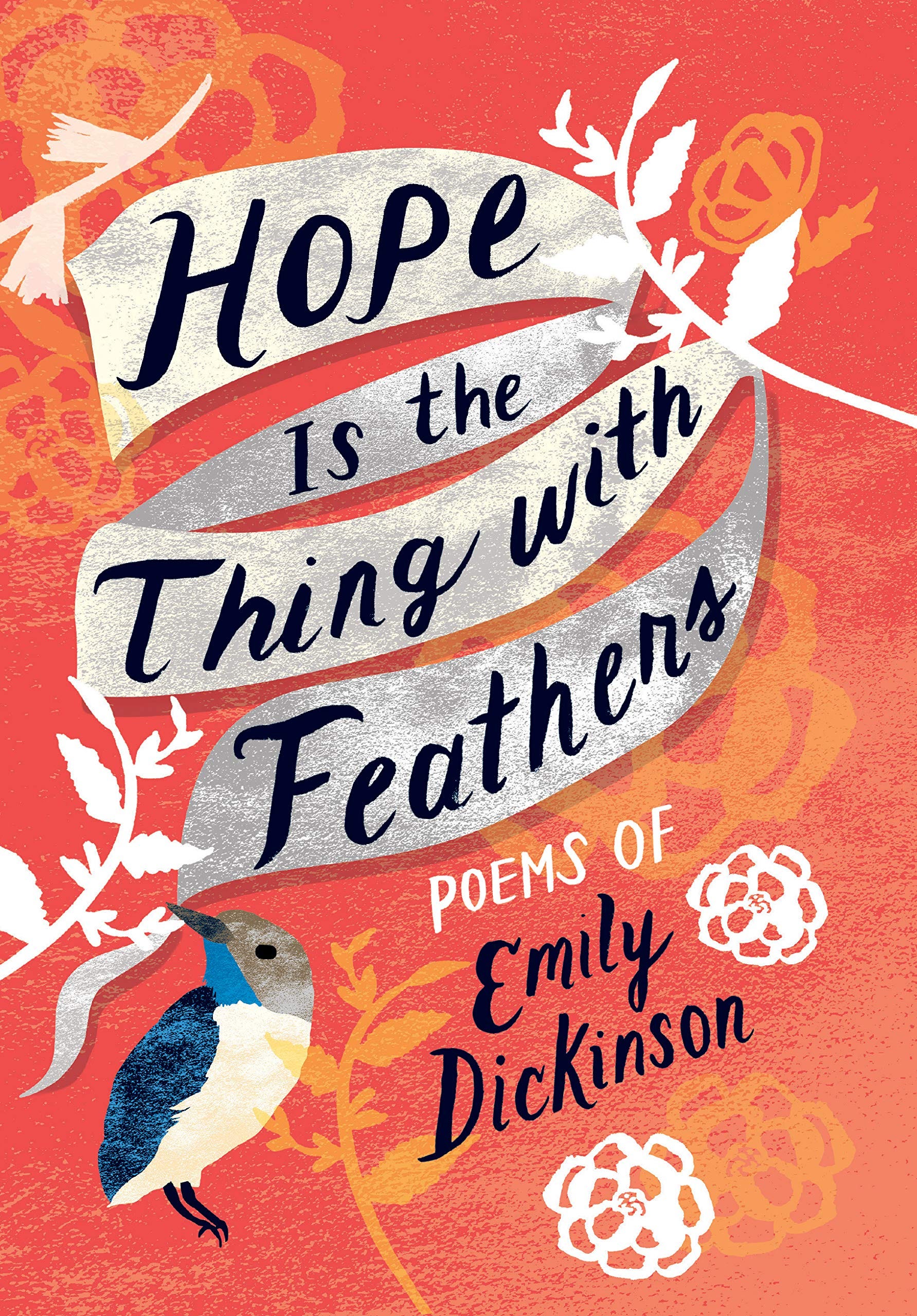
Hope is the thing
On hope being intrinsic to youth lit-storytelling, and how many adult creatives could use this lesson too

A couple years ago, when teaching ‘Writing Fiction for Young Adults’ in RMIT’s Professional Writing & Editing course, I had a particular classroom cohort who were not convinced that more adult-fare wasn’t inappropriate for teens.
This was a year that - as part of introductions, when I ask students to name their favourite/or last YA novel they read - someone earnestly declared Sally Rooney’s Normal People as their fave YA novel (and then unsurprisingly proceeded to drop my course because they were under the impression that “YA” was people in their early-20s when I dissuaded them that a novel featuring - among other things - German BDSM wasn’t, actually, young adult literature).
But I just had a really challenging (which does not mean unpleasant!) group that year, who were so sure that reading adult-literature as teenagers didn’t break them in any way, and more depressing/sexually explicit books didn’t bruise their upbringing. It took a lot for me to explain that just because they were reading adult-fiction as teenagers, didn’t make those books *for* teenagers - just read *by* them. Very different. The same way that just because I watched Child’s Play when I was about six-years-old, did not in fact make Chucky a child-appropriate movie (my Dad got confused at VideoEzy and thought that title did, in fact, make it okay … he learnt better when I insisted that every single doll and object in our house that had eyes, be removed.)
That group of students pushed me - in a great, and appreciated way! - to articulate what I consider to be a paramount “rule” that makes Young Adult literature (and Children’s/Youth Lit generally) categorised thus. And I boiled it down to this; Hope.
A necassary ingredient;
I am of the firm belief that young adult literature needs to end in hope. Whatever story you're telling, in any genre, if it's for teenagers or young people, I wholeheartedly believe that it cannot end on a note of despair and an absolute absence of hope. I, personally, think that when your primary audience is young people it would be a huge breach of trust and ethics to leave them by 'The End' with even a surreptitious message so bleak and potentially harmful.
My reasons are practical, on the one hand, I think it goes hand-in-hand with a duty-of-care to youth, who are physically and mentally more vulnerable;
Teenage mental health: how growing brains could explain emerging disorders
Developing teen brains are vulnerable to anxiety – but treatment can help
How the Teenage Mind is Primed for Anxiety and DepressionLinks to an external site.
But it also speaks to a much wider belief that I personally hold, tied to the privilege of working with - and writing books for - young people. And I don't want to abuse that privilege.
There have been exceptions, of course; 13 Reasons Why by Jay Asher comes to mind, which I personally find to be an awful book that kinda illustrates my point;
That these books do exist, that fly in the face of my ‘hope in YA’ rule doesn’t change the fact that it’s a fundamental ethos I have developed as both an author and agent. I am talking about a reckoning within myself as an artist, whose primary audience is young people. And I am talking about encouraging a similar interrogation amongst those creators in my orbit, to really think about the power we wield.
Hope is not ‘easy’
Nothing about needing ‘Hope’ is me suggesting that every story for young people has to begin - and end - in lollipops and rainbows. The Fault in Our Stars by John Green penultimately ends with a tragic character-death, and the ongoing knowledge that our protagonist - Hazel - is still going to die, and soon. The hope comes from Hazel accepting that her death will hurt people she has touched - but that’s not a reason to live scared, and withhold love - a lesson she learns from her own loss of boyfriend Augustus Waters, who she is better for having known - even though she lost him, and it hurt.
Speak by Laurie Halse Anderson remains a classic and groundbreaking YA; first published in 1999 about a protagonist choosing selective muteness as a response to the trauma of her rape. That novel ends in her rapist confronting and attempting to abuse her again, and the hope comes when she finally unleashes her voice and accuses him - and people listen to her.
These are just two examples, but I could reel off ad infinitum hard-hitting youth-lit titles that treat hope relative to their story-stakes and character-arcs, not ever choosing a “cookie cutter” soft-touch.
Sad books are good, actually
As a middle-grade author of sad books myself (*ahem*) I do also want to make clear that “hope” doesn’t mean books for young people can’t still be sad. In fact, I insist upon it! - and so did author and writer Myke Bartlett, when he wrote;
The ability to tolerate melancholy feels ever more important in a world rife with plague, conflict and famine. For the next generation of kids, disaster might not be an extreme event but something far more quotidian. They need books that reflect, rather than deny, that reality.
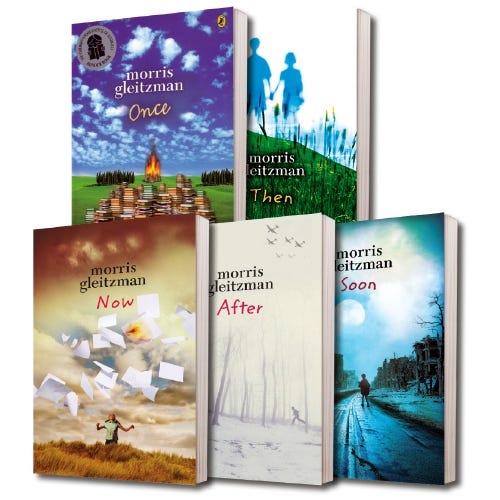
I also think back to an interview I once did with Morris Gleitzman, about his incredible Once series of middle-grade books about the Holocaust, and how he dealt with push-back from those who found them too depressing for young children. To which he told me - and I’ve carried it with me alongside my ‘hope’ ethos;
If it’s in the world, it’s for them.
If something is true and present in the world, then of course it can be discussed with children, and should be - it’s the *how* that changes, to be suitable for them. Tone, language, imagery - all of it adapted to their understanding, sensibilities and vulnerabilities.
Franky, it’s a question adult creators should ask of themselves more often too. Think of Hanya Yanagihara’s A Little Life being so tangled now in discussions of; just because she could write Tragically, Should She?
Don’t just take my word for it
In trying to bolster my argument for a skeptical RMIT cohort, I turned to those in the industry for quotes to share with my class - that has now been folded into a teaching unit in my ‘Writing Fiction for Young Adults’ class.
Jeanmarie Morosin is Head of Children’s Publishing at my publisher, Hachette - she is in fact one of my favourite people, and the publisher of my MG and YA novels. On the question of hope, she said;
I can only be true to my instincts, and my instincts scream that if a book has the potential to tip even one vulnerable reader over the edge into self-harm, then I am not the right publisher for that book. Of course we need to tackle difficult and dark subjects, but I think we have a responsibility to our readers to do that in a nuanced way that opens up worlds rather than offers a way out that doesn’t allow for hope or explore the idea that whatever a character or reader is feeling, good or bad, this too will pass. All of the big, messy, wonderful stuff of life is still ahead and you won’t be forever trapped where you are now. I guess I’m saying that writing and publishing YA, or any book for ‘children’ really, is both a huge gift and a huge responsibility. Cliché but true.
Sad books are fine. Books that offer no hope are not fine. There are readers out there who need the hope, not to have their anxiety – or worse -- confirmed. And the responsibility is remembering that you are not writing only for your own past teenage self.
I also asked Marisa Pintado, Head of Children’s Publishing at Hardie Grant, for her take on ‘Hope’ in the readership she works and acquires in;
I couldn’t agree more that a defining feature of YA is that glimmer of hope in the resolution, largely because of the vulnerability of the target audience – teens are at a particularly complex time in their development and with the flush of hormones comes an increase in risk-taking behaviour, and therefore an inclination to push boundaries (which is also what makes teens awesome and helps them find their feet as new adults, but with new hormones come new responsibilities that they’re not always ready to shoulder!)
Thus ending on a sense of total despair is out of keeping with authors’ duty of care to teens. Importantly, hope can look like a lot of things – not just falling in love or a happy ending. Defiance, a sense of empowerment or strength all fit the bill too – whatever it is that centres the agency and the future of the teen protagonist.
Finally, I asked a favourite Aussie YA author (and friend), Will Kostakis. Who had very wise words indeed;
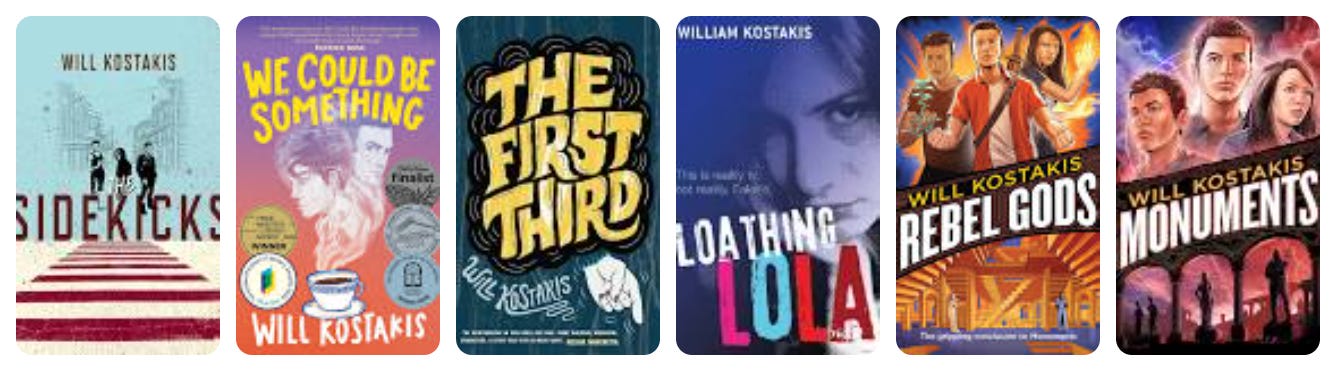
Write what speaks to you. Write what the story needs. But you’re not the “edgelord” you think you are, if your story’s theme is; “everything is messed up, and everyone is super sad.” That isn’t particularly groundbreaking, and it isn’t really adding anything to anyones life.
Adult creatives could learn this lesson too
Boy, do I wish Will Kostakis had been able to sit down and have a heart-to-heart with a certain Hollywood hot property; writer and director Taylor Sheridan, before he started penning the finale episode to his Western drama series, 1923.
Because what got me thinking about all this was watching the series-finale episode - A Dream and a Memory, Season 2 episode 7 - and thinking both how badly he botched the landing, and witnessing the fan backlash to his ending.
Not to spoiler anyone (look away if you intend to watch 1923 eventually) but there was a pretty epic romance established in its first season between a WWI veteran, turned African hunter from a Montana ranching dynasty - Spencer Dutton - and a pretty British aristocrat he met in Africa and married, called Alexandra ‘Alex.’ Season one was them sinking deeper and deeper into their romance - meeting some curly adventures head-on and together. Their pairing birthed countless TikTok fan videos and definitely grew the female audience of an otherwise pretty robustly Western (and violent) show. But then they were separated by circumstances conspiring against them in the season one finale. Thus, season two was all about Spencer getting home to Montana - where Alex told him she’d meet him, and they were each fighting separate storylines to get back to one another.
In the finale they reunited - briefly (and, it must be said, ridiculously) - only for Sheridan to strike a by-now pregnant Alex down with decrepit limbs from severe frostbite … she ends up giving birth to a premature, six-month old baby (I. KNOW!) that Sheridan decides gets to live despite there being nothing resembling a neonatal intensive care unit in 1920s Montana; this babe has logic-defying robust, crying lungs and will (apparently) live on unpasteurised goats milk, because Alex also decides to not have her legs and one hand amputated, and instead die with babe in her arms and Spencer wrapped around her …
Yes. She makes the ultimate (stupid) mother sacrifice.
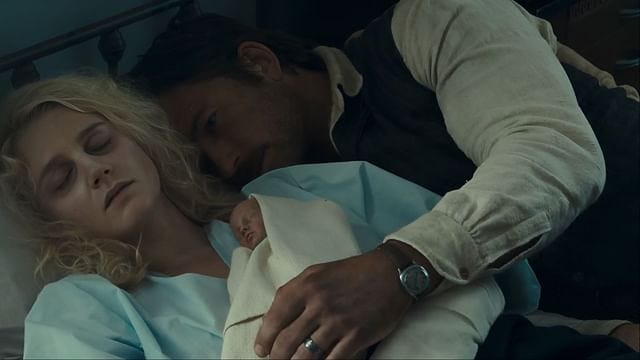
And reader, let me tell you - the fans are *pissed*.
Every social media post I’ve seen has people telling Sheridan to count his days, and that they’ll never watch anything he makes ever again.
And - critically - I’ve seen people (correctly) pinpointing their grievance with this finale for Alex and Spencer Dutton as ‘lazy’ (not helping matters is Sheridan doing a Titanic-rip off where they reunite in the afterlife wearing sparkly and debonair flapper fare.)
Fans are right, that was lazy.
And hope is many things, but it’s not lazy. I’d argue hope is harder to reach for and write credibly.
But so many adult creators seem to think that Angst, Depression, and Despair are “worthy” and - Capital ‘L’ - Literary mechanisms to instigate in their creativity.
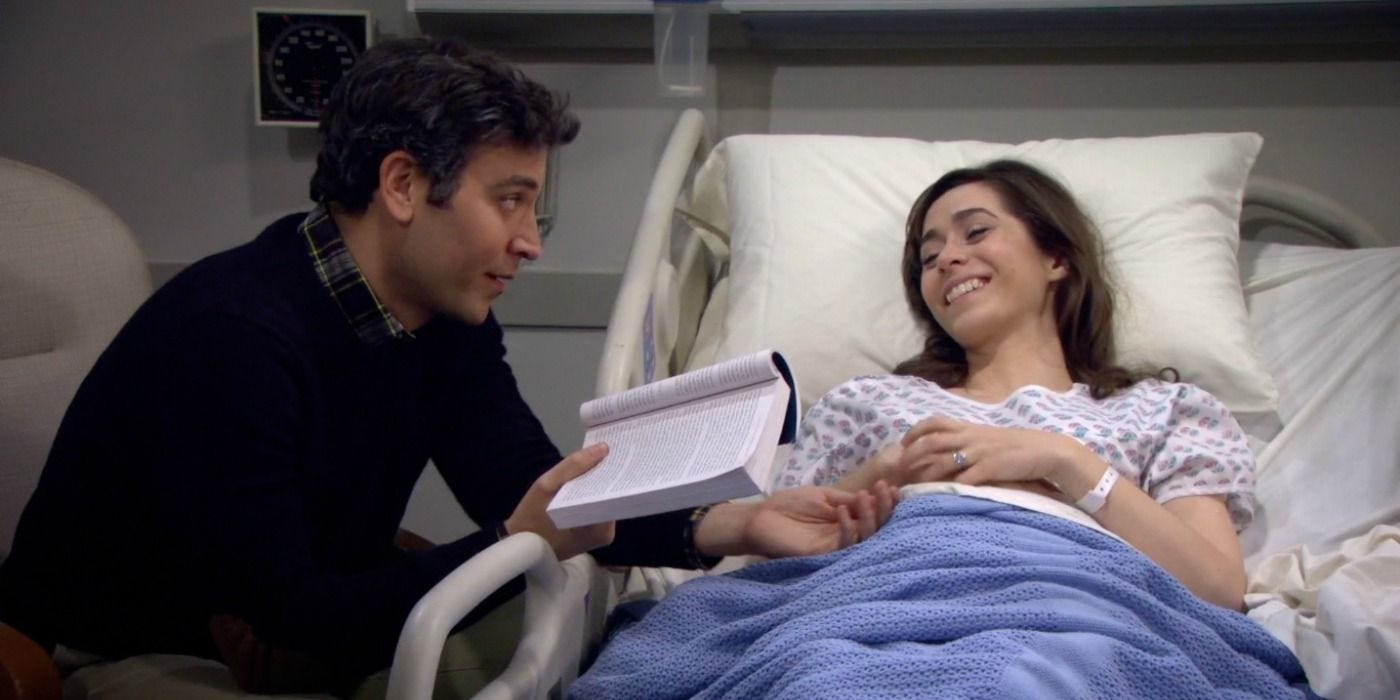
Just think of how many TV show finales (1923 amongst them) have been wrecked and ruined by too much bitter in the bittersweet. Think of How I Met Your Mother finally revealing in the final episode that Ted’s wife was Tracy (played by the incredible, Cristin Milioti) … only to declare she died of cancer in the same episode as her reveal. The show frequently ranks amongst the worst finales in TV history, and its subpar ending is part of the theorised reason for it having fallen so far out of the pop-culture lexicon when once it ruled the airwaves;
And of course - Game of Thrones is thought to have tanked their finale so badly that it likewise fell quickly out of pop-culture relevance.
Falling back on “powerful woman turns evil” was a blow amongst many in that finale, that almost tipped into schlocky pantomime for how many whacks they delivered to their weary audience, who found little redeeming by ‘The End.’
![Daenerys Targaryen's Death Scene | Jon kills Daenerys | GAME OF THRONES 8x06 [HD]](https://substackcdn.com/image/fetch/$s_!6JBk!,f_auto,q_auto:good,fl_progressive:steep/https%3A%2F%2Fsubstack-post-media.s3.amazonaws.com%2Fpublic%2Fimages%2F7fae1014-b6d0-4edf-b0cc-4ad3e830e4ba_1280x720.jpeg "Daenerys Targaryen's Death Scene | Jon kills Daenerys | GAME OF THRONES 8x06 [HD]")
All of these have tragedy pin-pointed as their downfall (and women suffering so men can still succeed, don’t forget that.) And the moniker of “tragedy porn,” comes from a feeling of emptiness accompanying the Tragical. An unearned (and therefore, lesser felt) sadness - a cheap shot rather than a finely-crafted arc.
Young adult and children’s books are not so needlessly cruel. They are not cruel for cruelty’s sake, or the for genius-gratification and ego-stroking of what some creators *think* Serious Stories are meant to be, and how they’re supposed to end.
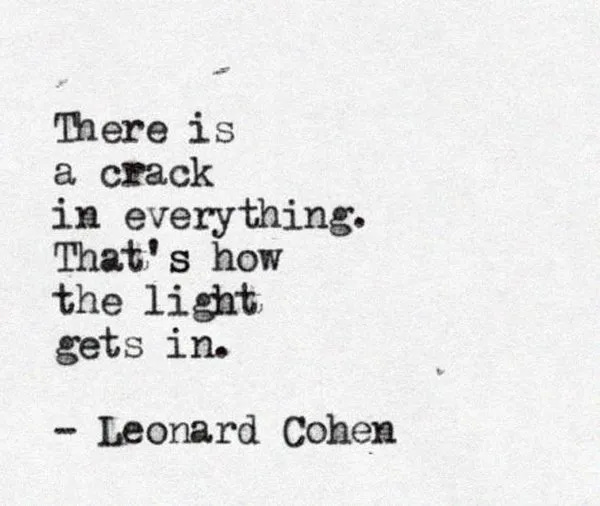
There is a point to melancholy and sadness in youth literature - it is always, teacher - and the best among them do try to find and reach for hope, to temper and amplify what tragedy remains.
After all;
A really interesting post! As someone who has a YA novel sitting there waiting to be brutally edited, this really got me thinking. Even though mine does end on a hopeful note, haha.
I adore your passion for YA and children's literature ❤️