On Craig Silvey
This is not normal, and it's hard to confront. But we must.

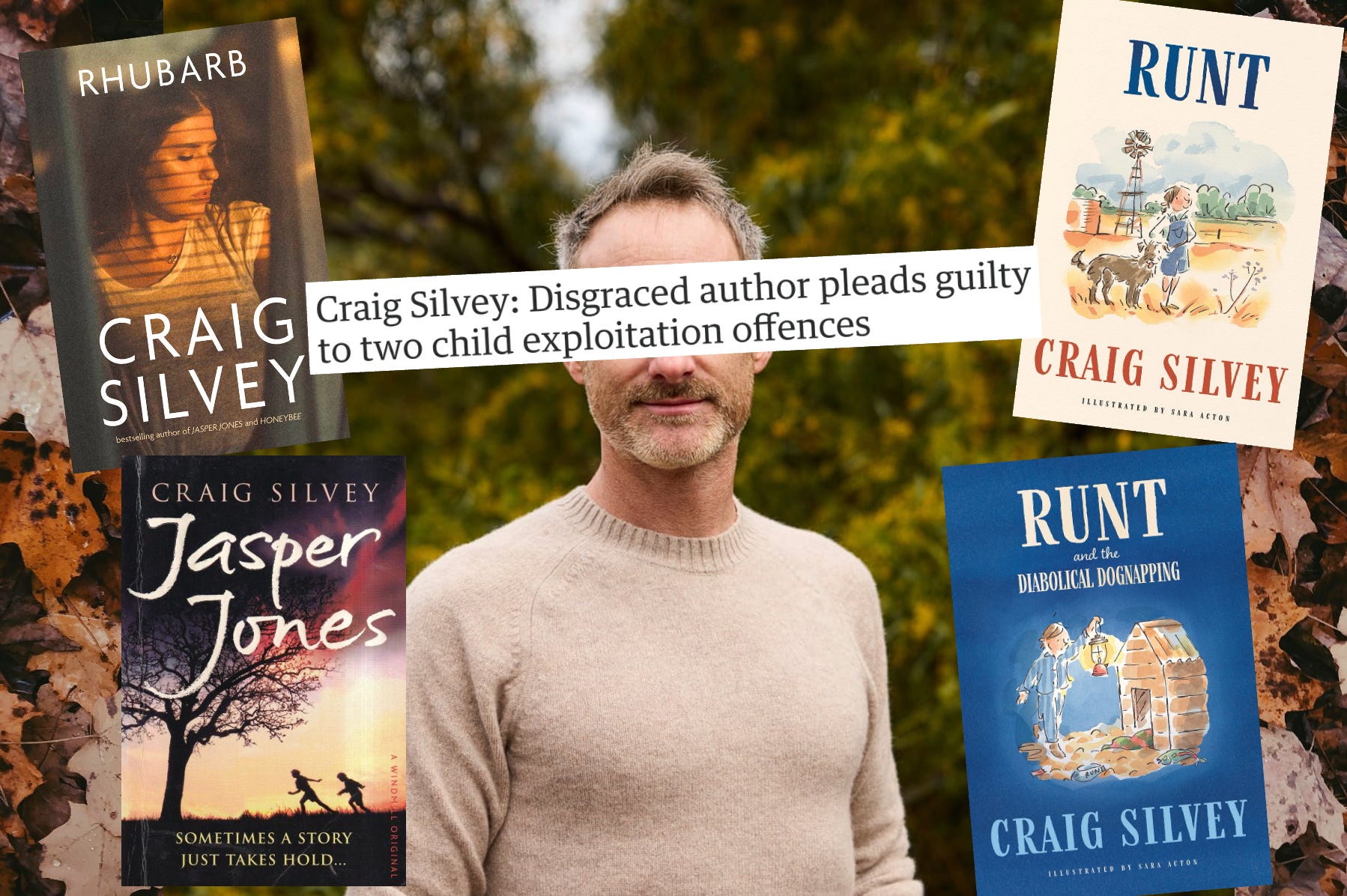
Australian author Craig Silvey has plead guilty to possessing child exploitation material. From SBS News;
Silvey, 43, was first charged in January after detectives from WA Police’s Child Abuse Squad raided his Fremantle home, allegedly catching him communicating online with child exploitation offenders and seizing his electronic devices.
He was later hit with extra charges, including allegations he produced child exploitation material between February and June 2022, and possessed further material on 12 January this year.
Those two additional charges have now been discontinued, and Silvey has admitted the remaining counts of possessing and distributing child exploitation material linked to offences in January.
He is next due to appear in the District Court on 3 July for sentencing.
Australian publishing and its children’s sector in particular, have been rocked by this. Silvey was a bestselling author whose books frequently appeared on curriculum, for study (Runt in primary school, Jasper Jones in secondary). His books had been turned into theatre and film, and before his arrest he was supposedly working on a new six-figure book deal.
When this News first broke, I made my views known that I thought it was appropriate to put those books away until the case was done;
Now we have Silvey’s admission of guilt, and I want to address this matter not because I have any particular unique insight, or a lightning-bolt idea to make it all bearable.
No.
I want to shine a light on the case because I’m part of the KidLit community reckoning with this horror, and I don’t want to do that alone.
If this is as far as you can read because it’s all too awful, then I understand and just know; this is not normal, and it’s okay to feel utterly undone and confounded by what’s happened.
I’ve taken solace from fellow authors who’ve written far more eloquently than I ever could on this matter, with practical advice and earnest reflection;
Craig Silvey has pled guilty to child exploitation. What do we do with his books?
Penni Russon’s piece in The Conversation not only addresses the unease I’ve long felt with Silvey’s literature (I’ve only read his Jasper Jones but was underwhelmed, and uncomfortable with his portrayal of violence against Indigenous and female bodies - so much so that I’ve not read anything else of his) - but Russon also gives advice on how to talk to children about his disappearance from bookshelves;
Gentle, age-appropriate honesty will be important in these difficult conversations. For younger children, that might mean something simple and direct: “Craig Silvey looked at pictures and videos of children being hurt, and shared them with others. That is against the law, and it harmed real children.” No young person should be made to feel ashamed for having loved these books.
I stopped posting my kids online. The Craig Silvey case reminded me why
Author Jenna Guillaume being very raw and vulnerable, detailing how she once met Silvey at a festival they were both appearing at, and found him to be “ a good bloke,” - the psychological spin she now feels to have not known (but how could she?) I think Jenna’s feelings of helpless horror have found an outlet in her dedication to not share images of her children online, precisely because you can never know who is a potential danger to them;
One of the most difficult truths to face when it comes to people who prey on children – and what helps the abuse go under the radar far too often – is that they are usually ordinary, affable, and all kinds of other positive personality traits. They are people we know. People we trust. People we don’t think twice about showing cute photos of our kids at the beach, or blowing bubbles, or starting their first day of school.
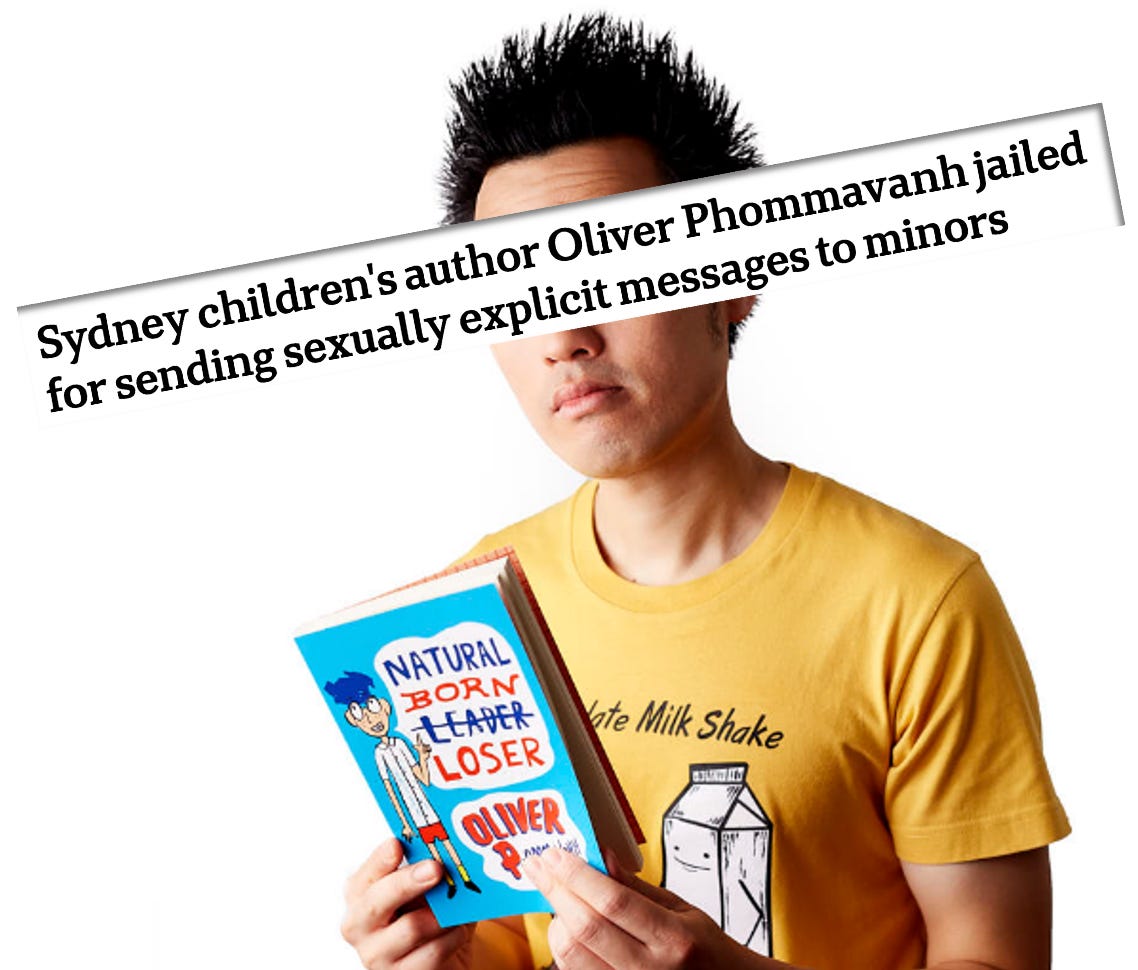
I also appreciate that both Russon and Guillaume touched on another recent case in Australian KidLit, of a children’s author found to be preying on young people;
Sydney children’s author Oliver Phommavanh jailed for sending sexually explicit messages to minors
Children’s book author groomed students he met through schools
I knew Oliver. Like Guillaume, I’d met him at Festivals we’d both appeared at - we followed each other online - heck, I had group selfies with him from those books events. I completely know and relate to that horrific whiplash of realisation; that such predators can hide in plain sight, that perhaps they have even chosen our profession in order to prey upon vulnerable young people. It’s horrifying and disgusting, and between these two cases I am sure Australian KidLit is forever altered, and scarred.
I only take solace in an assumption I have - and I hope it’s correct - that the investigations and subsequent charges against Phommavanh and Silvey means that there is a nation-wide taskforce dedicated to investigating our sector. That it clearly needs to be investigated - as these cases show - is disturbing, but the alternative is unbearable, and so I welcome the surveillance.
I also welcome the nation-wide schools discussion that has kicked off, about how to remove Silvey’s books from curriculum study;
I admit; when the News of Silvey’s arrest first broke, I was concerned by some statements that books and publishing organisations put out - but I understand they were being mindful of a possible court case. Now that we definitively know the outcome with an admission of guilt, I think those same organisations need to make clear their support of colleagues (particularly from Silvey’s publishers who must be reeling from this News, and again - may have feelings of guilt, however wrong-headed and misplaced) and also addressing their efforts to similarly remove his titles from shelves, etc.
I especially think support and statements from organisation are needed, because since Silvey’s arrest I have seen disturbing comments online from the general public, making outlandish assumptions. Hurtful comments about male children’s authors, for one - which is unfair and cruel. And speculations about Silvey’s connections to the Trans and Queer communities have been very disturbing; they need challenging and correcting immediately.
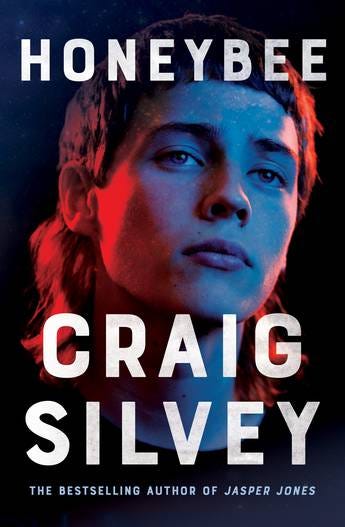
This last accusation seems to stem from his 2020 adult novel Honeybee; the publication of which has long disturbed me, since it was Silvey (a cisgender white male) writing from the perspective of a transgender fourteen-year-old. That it was published and even awarded in the year 2020, and with very little pushback from our industry as to its lack of ‘Own Voices’ context (even though that term is entirely imperfect), and again featured a lot of violence against young bodies, has always alarmed me.
In my creative writing class at RMIT; I even touch on the topic of ‘We Need Diverse Books’ and the aforementioned imperfect ‘Own Voices,’ by citing not the reading of Honeybee, but the one (fantastic) push-back review of that novel, from the Sydney Review of Books;
And yet, the focus of the narrative around this trans girl is their relationship to toxic masculinity. Similar themes arose in Jasper Jones, and this is presumably where Silvey’s own interests lie. A more interesting feat of authorship and invention might have been for Silvey to focus on this character’s relationship to femininity. One has to wonder: what did Silvey’s research open up for him?
Conflations I’ve seen online from the general public, have assumed that because Silvey has written books for children in the past - and because the protagonist in Honeybee is 14-years-old - that this very confronting book was also intended for young readers. They’ve inferred a lot from Honeybee being so violent and sexually-charged - at a time when “culture wars” in America have been increasingly migrating to our shores, and we know for a fact that books for young people with LGBTQIA+ themes have been specifically targeted;
Since 2021, ALA has tracked a sharp spike in censorship attempts in libraries. OIF tracked 4,235 unique titles challenged in 2025, the second highest ever documented by ALA. The highest ever documented was 4,240 in 2023. Of the unique titles challenged in 2025, 1,671 (40%) represent the lived experiences of LGBTQIA+ people and people of color.
The general reading public’s confusion about Silvey’s adult and young adult fiction was something that concerned Penni Russon, and she touched on in her Conversation piece as well;
Jasper Jones was published in Australia as adult literary fiction. But in the United States, it was published as young adult fiction, making the American Library Association’s 2012 Best Fiction for Young Adults list. It was then repackaged as young adult in Australia.
While I don’t advocate censorship, I’ve long found the novel’s presence on school text lists troubling: Laura’s sexual abuse and death by suicide exist primarily to catalyse the growth of a young male protagonist. I have always felt the original decision to publish Jasper Jones as adult fiction – which would have driven editorial decisions, including its (bleak) ending – was correct.
I have seen similar conflation and misunderstanding about Honeybee and people making harmful and hurtful connections between its topics and Silvey’s guilt. That he can be a cis author whose book is continuing to harm the vulnerable LGBTQIA+ community through such unaddressed wrong-headedness is alarming, and needs correcting whenever we see it used like a cudgel in comments.
It’s one of the many reasons I do believe that clear statements need to be made; even as to which audience some of his books were intended for because there is clearly confusion amongst the mayhem.
And finally, speaking as a children’s author myself, I - and many in my orbit - have been wondering what we can do to help keep kids safe, and bring some assurances to the school and library communities we operate within.
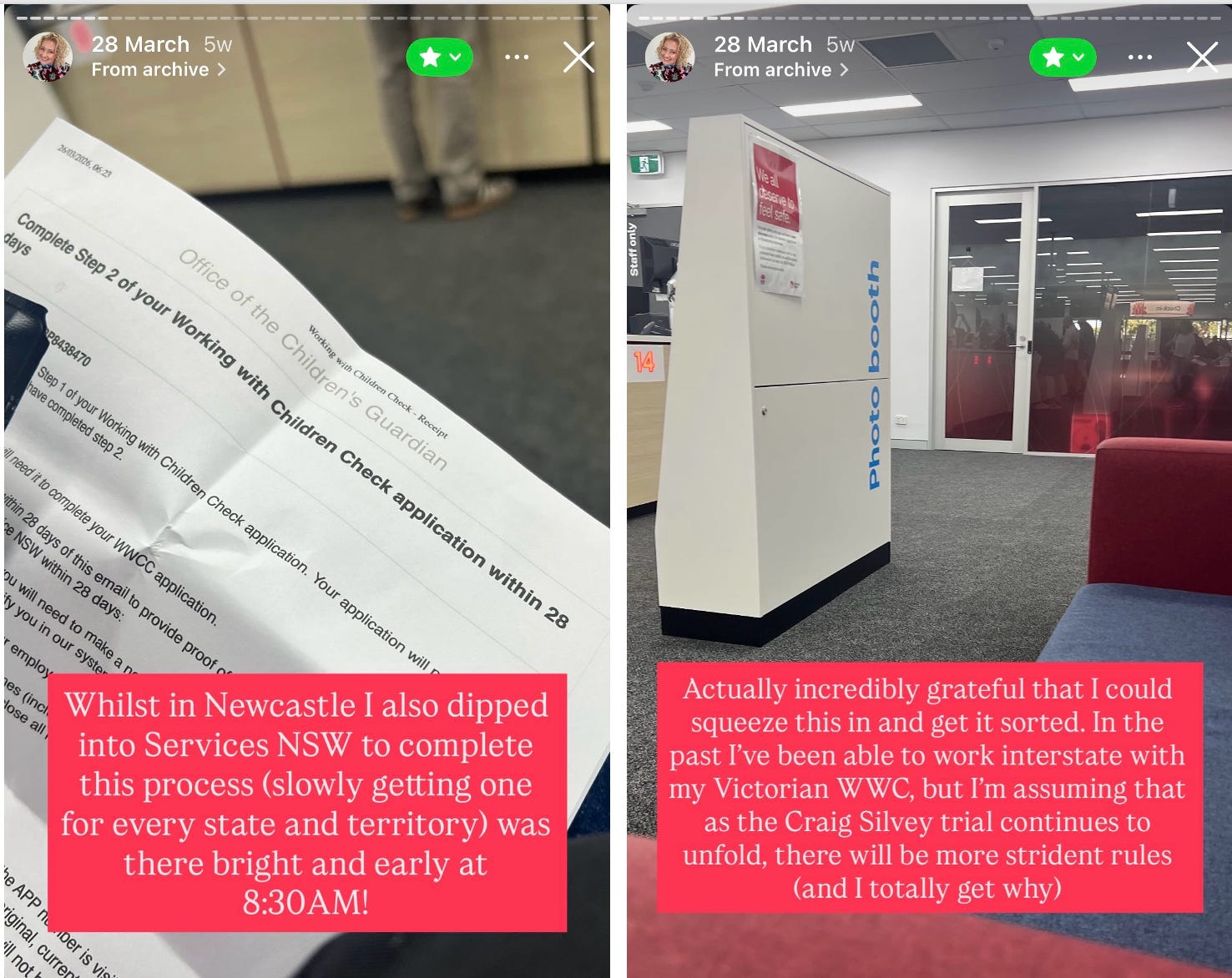
It’s not perfect, but I have been taking steps to acquire Working With Children (WWC) checks, in all Australian states and territories. I obviously have always had one for my home-state of Victoria where I predominantly operate, giving school-talks and workshops. But I am increasingly looking at book-tours and child-friendly appearances at libraries and bookshops interstate, and I want to be as prepared as I can and make things easier for organisations that I’m working with on such travels.
It’s not easy - some Departments require in-person verification of ID for WWC checks (this isn’t a bad thing in the process by any means, just tricky when you’re interstate). But when I was in New South Wales recently for a Writers Festival, I took time out of my morning and scheduled an 8:30AM appointment with Services NSW to complete my check. Other states allow for interstate and overseas online applicants - I’ve completed my Queensland WWC, and I am in the process of finalising my South Australian one.
Cost is also a little bit of a hindrance - each check is costing me $140, thereabouts. It would be so much easier if there was a nation-wide one-and-done Working with Children check, but therein lies one of the issues that has already been highlighted by other criminal cases. Most recently and disturbingly; the sexual violence uncovered in Australian childcare centres;
This horrific case has exposed a huge crater in Australia’s childcare safety networks - and Australia is transitioning to a national, continuous-checking system for child-related work to fix loopholes where educators could work across states despite bans. Historically, Working with Children Checks (WWCC) were state-based, but a new national database enables information sharing to prevent “forum shopping” by offenders.
Why this hadn’t been done beforehand is alarming and infuriating, and the blind-spot has caused real, irreparable harm.
And again - there’s been no evidence to suggest that such checks would have uncovered Silvey and Phommavanh’s abuse, either. But I feel better having them done, and so that’s a small mission I can control and let myself work on to try and regain some footing during these uncertain and terrifying times.
I’m also listening and talking to other creators, as we reel from these cases. We’re talking about what we can do to make children safer, set a standard in our communities, and be there for one another as we acknowledge the enormous amount of harm that’s been done.
I take solace from that.
And from the knowledge that we are so passionate and fierce in our dedication to doing everything in our power, to protect children. As author Matt Stanton said, better than I could;
What do you think about the stance that Victorian public libraries have taken about keeping Craig Silvey’s children’s books on their shelves on the basis of intellectual freedom, reinforcing the importance of not censoring? As a librarian, I disagree with this from a child safety and wellbeing perspective. I don’t believe it is a “slippery slope” to censorship, as many librarians say. I find it difficult that my colleagues are staunchly adhering to this ideology with no nuance or critical thinking applied to this particular situation. In times like this as information professionals we should be empowered to make informed decisions for the betterment of our communities. Keeping books on our shelves written FOR children BY a child abuser is not that.
This is all incredibly unsettling. In my experience working in the sphere of DV (more often with women but sometimes with kids) I think your comments that these men are the ordinary men who we know and trust is so important. So often, when friends and relatives learn about abuse they are shocked and comment on what a lovely fellow he was. The revelation of what is happening behind closed doors, in secret when nobody is watching always shocks us to the core, but it is the norm. Abusers rarely present as monsters. When it is an author whose books are on our shelves, in our libraries and in our schools it feels particularly invasive.
Thank you for sharing your thoughts about this horrific abuse of trust. The only positive is that he has been caught and is being charged.