"Plotless Novels" and what Romance can teach us about good writing
The absence of something can sometimes allow you to see a bigger picture.


A little while ago, I was a guest on the (brilliant) Dear Rach & Soph podcast, with authors Rachael Johns and Sophie Green (who is also a Hachette publisher). I was on the May 25 podcast;
Plotless novels, genre creep & the art of children’s books: a masterclass from Danielle Binks
Also available on Instagram
The idea of the “plotless novel” is one I also teach my creative-writing students at RMIT and it tends to be one of those lectures where I can literally see mental puzzle-pieces falling into place as we talk through plot - what it is and how it functions.
I generally begin by asking; ‘who has read The Secret History by Donna Tartt?’ - a book that I personally love but has been less known by my students in recent years. To those who have read it, I ask; what’s it about?
Ah. Here’s where some will unintentionally start sounding like George in Seinfeld, pitching a show to NBC that’s about “nothing”;
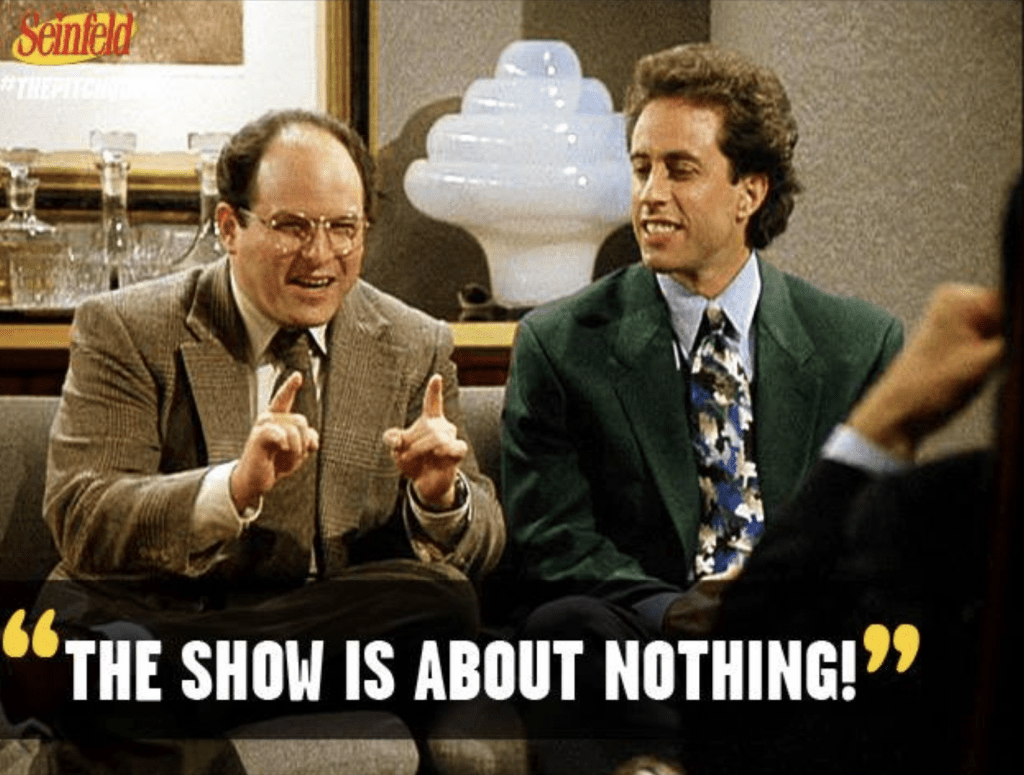
But that’s also kinda accurate for The Secret History. It’s pretty much a novel about a cult-like Classics class. Psychological and interpersonal ~stuff~ ensues. Plot does happen (there’s murder, blackmail, and chaos! It’s Bacchae, Dionysus!) but Tartt tricks us because she stacks the beginning by mentioning a dead body found on page one, and then gives us the most dense character-study, that marinates in place (Vermont, Rome) for majority of the novel.
This is generally how “plotless” novels go; stacking their beginnings with one inciting incident at the start, and then that’s … it. There’s less action and more reaction on the page, to that one incident.
Versus a very plot-driven narrative (crime, mystery, thrillers) that generally follow the pattern: this happened and then this happened and then this … stacking one incident atop the other, so that many more follow, building to a crescendo.
I love both these story frameworks, it must be said. But the genre that most uses the “plotless” device is Romance, and it’s the genre that has taught me the most about storytelling and plotting - via the absence of overt action and “plot.”
For me it’s akin to negative space in art that uses the “empty” area around and between subjects to define shapes, create balance, and hide secondary images.
That the absence of something, allows you to see a bigger picture.

I in fact teach my RMIT students that if they want to take writing seriously and grow as artists, they should be reading everything, especially Romance.
When I was starting out as a writer - even of youth literature middle-grade and young-adult books - I got a lot out of studying the craft and history of Romance, because it’s so robust on plotting, tension and pace in particular;
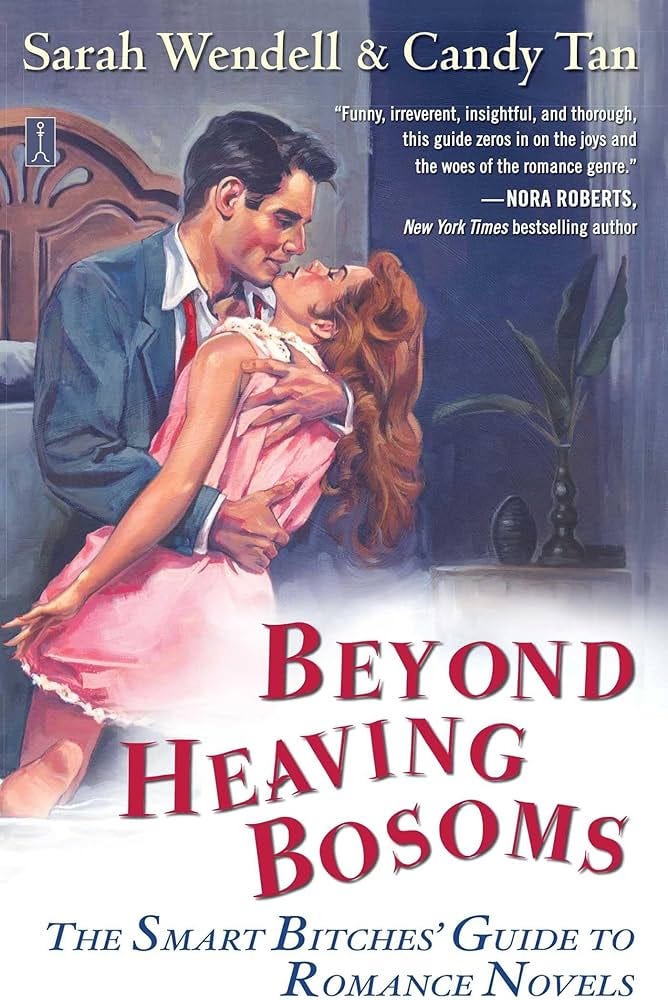
If you think about it; why does anyone read romance when we all know it’ll be happy-for-now or happily-ever-after by The End? Answer: it’s the tension and stakes that the author crafts, that keeps you turning the page even as you anticipate the inevitable. In this, romance shares a lot in common with crime and mystery-writing, that also has the same promise of ‘crime solved’ by The End.
I still learn a lot from romance authors, for instance - I’ve sat in on online workshops with one of my favourite his-rom authors, Sarah MacLean;
And I’ve got a lot out of such sessions precisely because every good tip and trick she gives isn’t just specific to romance, but all genres and good writing generally. One of my favourites, for instance; is MacLean keeping a note at her desk that she keeps checking in with as she writes her story, chapter-by-chapter. It’s as simple as;
Why can’t they be together yet?
That’s so simple, but vital. And it works for any genre, really. Just sub out “be together” for “solve the case” or “save the world” etc and it reminds you, as writer, that you have to “show your working-out,” so to speak - you have to plot out the progress to make the story make sense for characters, and readers.
Because stories generally are built around three pillars of obstacle that create stakes and tension in a plot. And a plot can be boiled down to; somebody wants something badly, and is having trouble getting it. So what stops them from getting what they want/need? Most of the time it’s all three from categories of;
Internal
External
Philosophical
Let’s take Lizzie and Darcy in Jane Austen’s Pride and Prejudice. The inciting incident the whole plot keeps responding to, is; Mr Bingley, a rich bachelor, has rented Netherfield estate.
From there; Why can’t Lizze and Darcy be together in the first-half of the novel?
Well … Lizzie is put-off by Darcy’s arrogance, and Darcy is mortified by the entire Bennet family. That’s arguably a mix of all three; their internal dislike of one another based on assumptions, the external members of Lizzie’s family that make Darcy think she’s a gold-digger (later it’ll be Lizzie having heard Wickham’s meddling false-narrative that further clouds her judgement of Darcy), and the philosophical is the general Regency period social-strata and customs they must abide by.
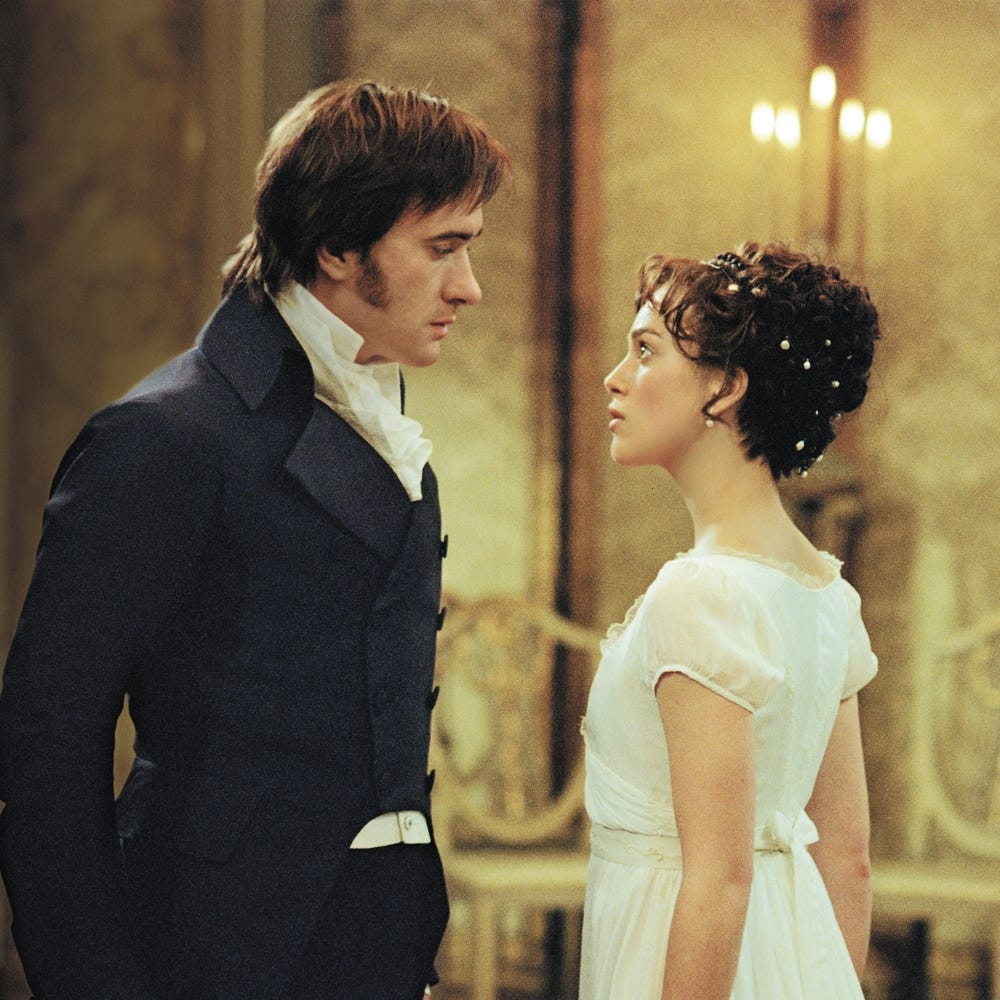
Right when you think Lizzie and Darcy are getting close to sealing the deal and finally getting their happily-ever-after, Jane Austen bounces back with that;
Why can’t they be together yet?
And more obstacles are thrown in their path; Darcy’s terrible proposal, Lizzie’s discovery that Darcy obstructed her sister’s happiness, Mr. Collin’s proposal lest the Bennet’s lose their family home, Lydia running away with Wickham and thus putting her reputation at risk (and her family’s), Lady Catherine de Bourgh insisting that Lizzie stay away from her nephew … Pride and Prejudice truly is a brilliantly-plotted novel, that highlights all the pillars of teachings that Romance novels generally impart.
And I often see emerging authors failing to check in with their characters on that simple question of: “why can’t this person have everything they’ve always wanted right now?” - the answer generally comes down to a lack of stakes, which is a lack of obstacle, and this especially curses the middle of a story (“saggy middle” often happens when a story runs out of steam). People put too much stock in external stoppers and not enough in a character’s internal hang-ups or worldview that can hinder them too, equally it’s boring if a character’s journey is all internal with no fluctuations in philosophy or physical drama driving them too.
Romance can teach you that, and not just within the romance genre.
If you’re starting out as an emerging-writer, it can be a really good exercise to try and break down the obstacles according to internal, external and philosophical stakes in film, tv and novels.
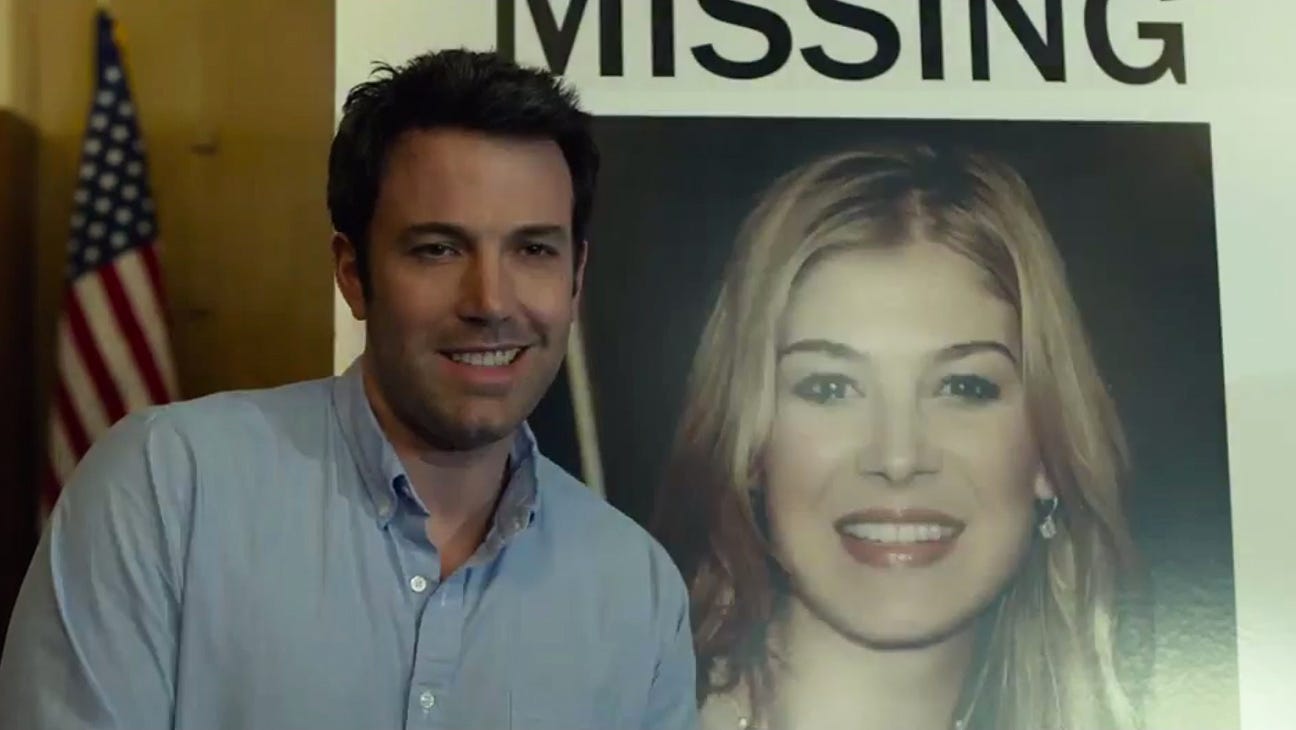
Take something like Gone Girl by Gillian Flynn. What’s motivating sometimes-narrator Nick Dunne to find his missing wife, Amy? Externally; Nick doesn’t want to be wrongfully blamed for Amy’s disappearance or death - he wants freedom. Philosophically the novel is fascinating - because it spins around old adage about “the husband did it,” when Nick finds himself losing at a game of public-perception that he never wanted any part of, and realises this whole mystery is going to be won or lost on publicity and people’s preconceptions. Internally he has to reckon with his marriage even before Amy’s disappearance - he has to acknowledge how little he actually knew his wife, and understood their life together …
The key to stakes and obstacles is also to remember that each character should have them - not as complicated and fully-realised as the protagonist/s, but consider how the obstacles are flipped or diverge in Gone Girl for the character of Amy Dunne. Perfect.
I promise, Romance is one of the genre spaces that you can get an incredible lesson in these basics of plotting and storytelling. And especially in Historical-Romance where everything is heightened and dramatised - the strict societal rules of engagement give such great boundaries and limitations too. And because there’s rarely too much reliance on action-led plot, it highlights the myriad internal and philosophical stakes that should exist in story.
If you need to learn tension and stakes, read Romance!
Such a brilliant article about so many aspects of writing, including tension, stakes and motivation. Loved it. I really liked the examples you offered to and will revisit the Romance genre in my local library.
Great piece! I’ve just finished Rainbow Rowell’s two adult romances, which are not at all plotty, but such a wonderful study of deeply affective, intimate writing (and I don’t mean the spicy scenes; just generally!) I adore Secret History and other character driven novels like Still Life and Heart the Lover. They’re definitely my preferred kind of books. Even though the plot is hard to articulate, I find them far more gripping than most plot driven novels. We can learn something about craft from all well-written novels.