Prediction: the next generation of 'Lad Lit' is coming
... and I think it's thanks to the Bill Lawrence's "sad-dude" television universe; a balm against Andrew Tate, Looksmaxxing, hyper-masculinity and reductive patriarchy.

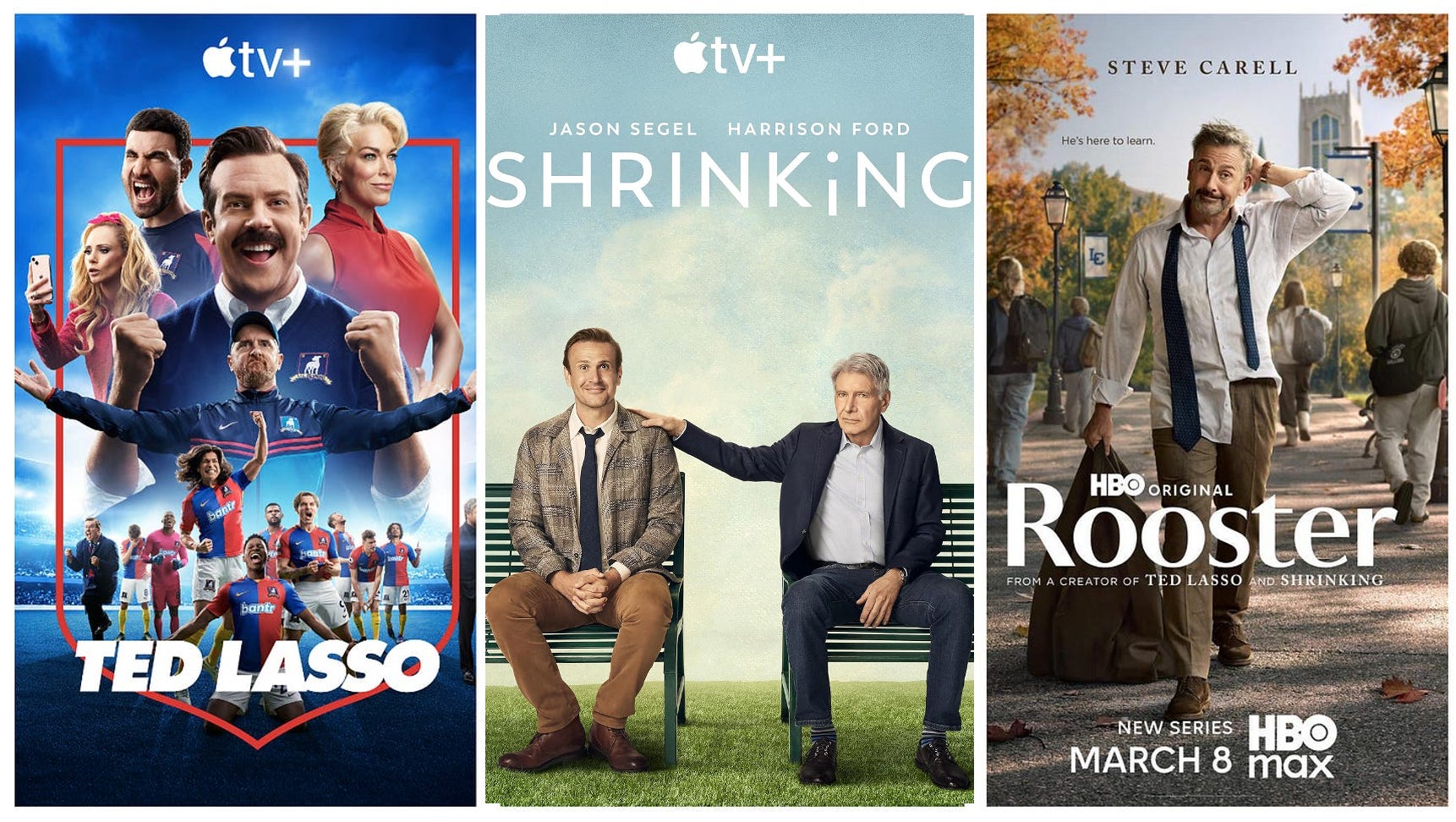
The Bill Lawrence Universe
I read a really interesting article the other week;
All about perhaps my current favourite TV show-runner writing hit after hit, and some of my favourite TV shows lately; Bill Lawrence.
He’s had an incredible and expansive career developing and writing scripted television, starting with Spin City in 1996. He reached huge heights of popularity with his 2001 series Scrubs (recently rebooted), then developing a fantastic but under-appreciated series called Cougartown in 2009, and eventually reaching a quite literal fever-pitch with Ted Lasso - developing the series alongside Jason Sudeikis, Brendan Hunt, and Joe Kelly in 2020. In 2023, Lawrence partnered with Ted Lasso alum Brett Goldstein and actor/writer Jason Segel to create one of the most critically-acclaimed and beloved shows of recent memory; Shrinking.
And now - simultaneously - he has the season 10 Scrubs reboot airing, alongside season 3 of Shrinking (renewed for a fourth season) and brand new show created with Matt Tarses, Rooster also landed this year - starring Steve Carell and also recently renewed for a second season.
Lawrence is on a roll - and with something like four other series at various stages of development in the pipeline.
But according to his Wikipedia page, it wasn’t always such smooth-sailing and before his show Spin City, he; “briefly wrote for Boy Meets World, Friends, and The Nanny, all shows he was fired from.”
I think it’s also worth noting that Lawrence has been married to (incredible) actor Christa Miller since 1999, and she has appeared in many of his shows (and in fact, tends to be fan-favourite in pretty much all of them; Jordan in Scrubs, Ellie in Cougratown and now Liz in Shrinking - the key being that she always plays an absolute mean Biatch who men adore even as she sometimes shows them open and constant disdain. Marvellous.) I tend to believe being married to such a legend has helped shape his creative output too, and I think Miller said as much recently in an interview with Desy Lydic;
Interestingly; it is Lawrence himself who has dubbed his latest trio of television “my sad, middle-aged guy trilogy”;
Surprising that this does indeed perfectly summarise all of his shows, and may well reveal the “sad, middle-aged guy” in all of us that love them so much (Shrinking has an 88% score on RottenTomatoes, for instance).
I also genuinely think that Lawrence’s middle-aged guy universe is a balm for the times. A repudiation of; “The Manosphere,” and Andrew Tate-style misogyny. When there’s a literal rapist in the White House, “Looksmaxxing” male body dysmorphia, and - most harrowing in recent times - a “Rape Academy" in which a CNN investigation revealed 20000 videos of women allegedly drugged and filmed by husbands, exposing a hidden online network with 62 million visits in one month alone.
At a time when young people - young men especially, but young women too - are tending towards the far-right politically;
… I find something uplifting in Lawrence portraying different ways for men to be men as they enter middle-age. He’s particularly good at showing male mentorship; be it soccer coach Ted Lasso encouraging everyone around him to ‘Believe’ and ‘Be Curious, not Judgemental’. Harrison Ford becoming father-figure to his work colleagues as they navigate grief and change; and likewise choosing to end his career in a quietly challenging and powerful role like Shrinking. J.D. returning to his teaching hospital to navigate being a very different kind of leader to the one he had, growing up and learning in Scrubs. Or Steve Carrell portraying an author of sometimes-problematic sexist pulp fiction, revelling in his real-life polar-opposite persona of “dorky dad,” for Rooster - extending his caregiving beyond his own struggling daughter, to the students in his first classroom.
And I actually wonder if Lawrence is ushering in the second-wave of “lad lit” in pop-culture; the last time that middle-aged men were in the spotlight as a cultural phenomenon in the 90s and early-00s.
In fact; I hope he is, and predict this might be on the horizon as a publishing trend, since the last time ‘lad lit’ rose to the fore, it was heavily influenced by - and influenced - film and TV pop-culture too.
Lad Culture of the 90s - led by British blokes
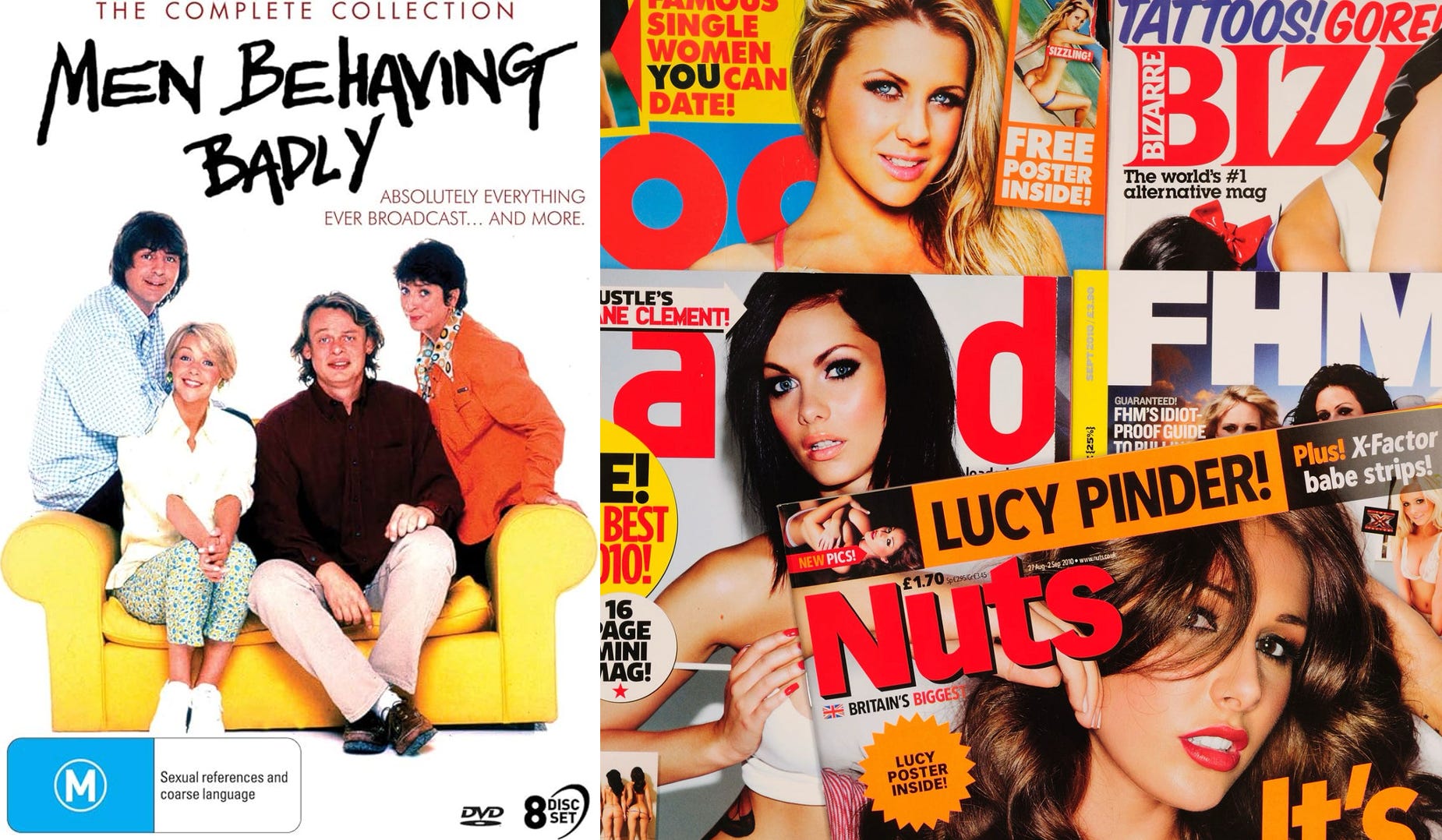
The term “Lad” is a British one, informally meaning a boy or young man. In the 1990s and into the early 2000’s this cohort of young men were being actively marketed to - particularly via glossy magazines, and especially in the UK.
These were mags often with half-naked women on the covers and covering everything from women, to sports, fashion, motoring, lifestyle … the male-equivalent of women’s magazines that had abounded at the time; but instead of Vogue and Women’s Weekly they had FHM and Maxim. These magazines were dubbed “Lad Mags” and the term became a catch-all across different pop-culture landscapes. There was even an Australia TV comedy series called Stupid Stupid Man, set in a men’s magazine workplace.
In 1992 the British comedy series Men Behaving Badly launched, about two male best friends in their 30s with wildly different personalities navigating life and relationships. It was a seminal piece of “lad lit” pop-culture at the time, and then in 1998 Guy Ritchie released his film Lock, Stock and Two Smoking Barrels that further personified this new wave of male-entertainment, followed by his 2000 film Snatch.
Arguably in this time Richard Curtis was also venturing into lad-esque films - with his 1994 Four Weddings and a Funeral, though I think they’re more retrospectively seen as appropriately lad-ish (Love Actually - for the many sexual shenanigans - and About Time - for the father/son focus - definitely are) - but because his writing was more universally aligned with female-audiences, he doesn’t often get a look-in to the lad timeline, though I think he (and Hugh Grant) contributed to the personas.
The media landscape was catering to “lads” in a big way, and seeing returns on their investment - a booming period for mens’s magazine sales, and proven box-office success. At the same time, book publishing cottoned onto this emerging new market who had been laying dormant, but were quickly becoming coveted … we already had “chick lit” - now it was time for “lad lit.”
The Original Lad Lit
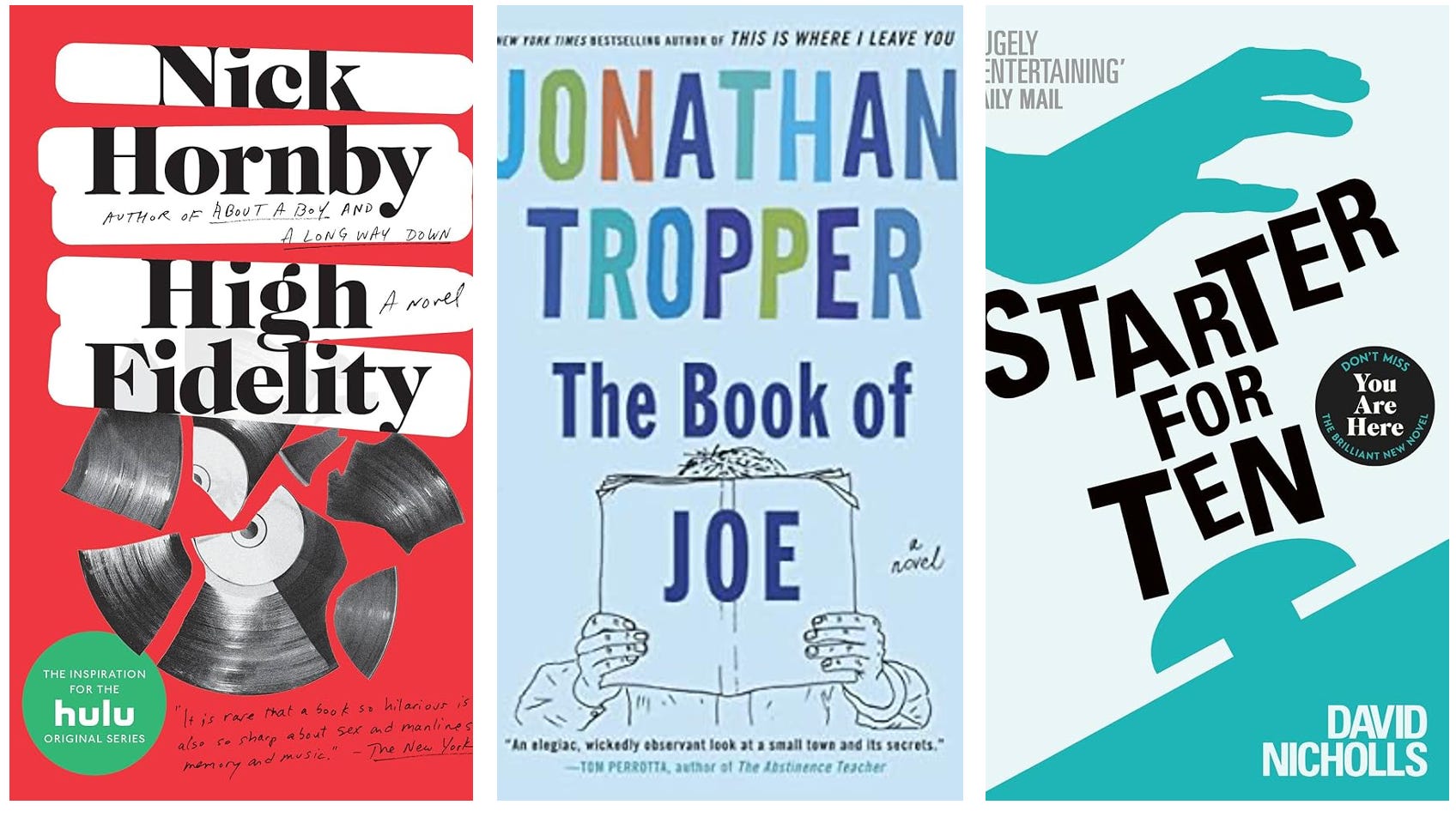
Nick Hornby undoubtedly led the charge of lad lit - first with the release of his 1992 autobiographical essay Fever Pitch - and then with the release of his 1995 debut, High Fidelity - about Rob, a 35-year-old record store owner and compulsive list maker, who recounts his top five breakups, including the one in progress.
The book was an instant success - both critically and commercially - selling one-million copies and the film rights quickly snapped up (made into a 2000 film starring John Cusack that switched up the London-setting to Chicago).
Thereafter Hornby had another hit - About a Boy (1998), also made into a film - and fully ushering in a wave of “lad lit” books.
Now - to be clear - all of literature has always been for men. But it’s also true that for much of the latter-half 20th century and into the 21st; men have not read as much as women, who are definitely the dominant buying-force in the books market (men account for about 20% of fiction sales, the rest are women.)
The reasons are often overtly or subtly misogynistic and reductive (not to mention; flimsy) - the idea that women are more inherantly empathetic and can therefore relate to fictional characters easier, or that reading is somehow inherantly “feminine” … but nobody really knows, and much is bogus.
One theory with both pros and cons has always been that boys and men want books that they can relate to and see themselves in (as we all do) - and given that majority of fiction is dominated by women in books, and behind the scenes of publishing - that maybe they weren’t being catered to.
Lad lit tried to counteract this assumption by leaning into the idea of focusing on the modern-man - often written in witty, conversational style, focusing on relatable, often flawed, and emotionally stunted protagonists—particularly men—navigating modern life, relationships, and maturity.
No, it’s not groundbreaking.
But yes, it did work.
After Hornby there were a slew of lad lit authors, memorable amongst them and some of my favourites include;
David Nicholls - Starter for Ten - his debut 2003 novel (also made into a great film). Set in 1985, working-class student Brian Jackson navigates his first year at Bristol University. Though Nicholls was really launched into international stardom more with his 2008 novel, One Day.
Jonathan Tropper - Plan B - the American author’s 2000 debut, about a group of friends turning 30 and confronting the realities of their lives so far. I like this, but I am a bigger fan of Tropper’s The Book of Joe - about a successful novelist who wrote a savage fiction book based on his hometown, returning home for the first time in years after tragedy strikes.
There were a slew more (but the above are the best, in my opinion - and my favourites).
Lad lit had a real boom, that started to taper off around the time of the “digital shift” that saw a lot of lad’s magazines switch to online-only and stop their print-runs entirely. By 2005 especially, the sub-genre was waning (in Australia, the Geoff Deane TV-series Last Man Standing got one season before cancellation, for instance.)
But just because the boom period of lad lit popularity waned, doesn’t mean it’s ever entirely gone away - or that it’s very British-genesis is entirely faithful to these stories that have always existed, just with less-catchy terminology.
Non-Fic Lad Lit
Very briefly; there is a sub-genre of non-fiction that is very male-orientated and tends to change with the times, to reflect the times. But they’re not technically “lad lit” - the clue being that the ‘Lit’ stands for ‘Literature’ - and needs to be fiction (Hornby’s Fever Pitch just scrapes in as narrative nonfiction, that has been adapted twice).
Though I do think you can have non-fic lad lit;
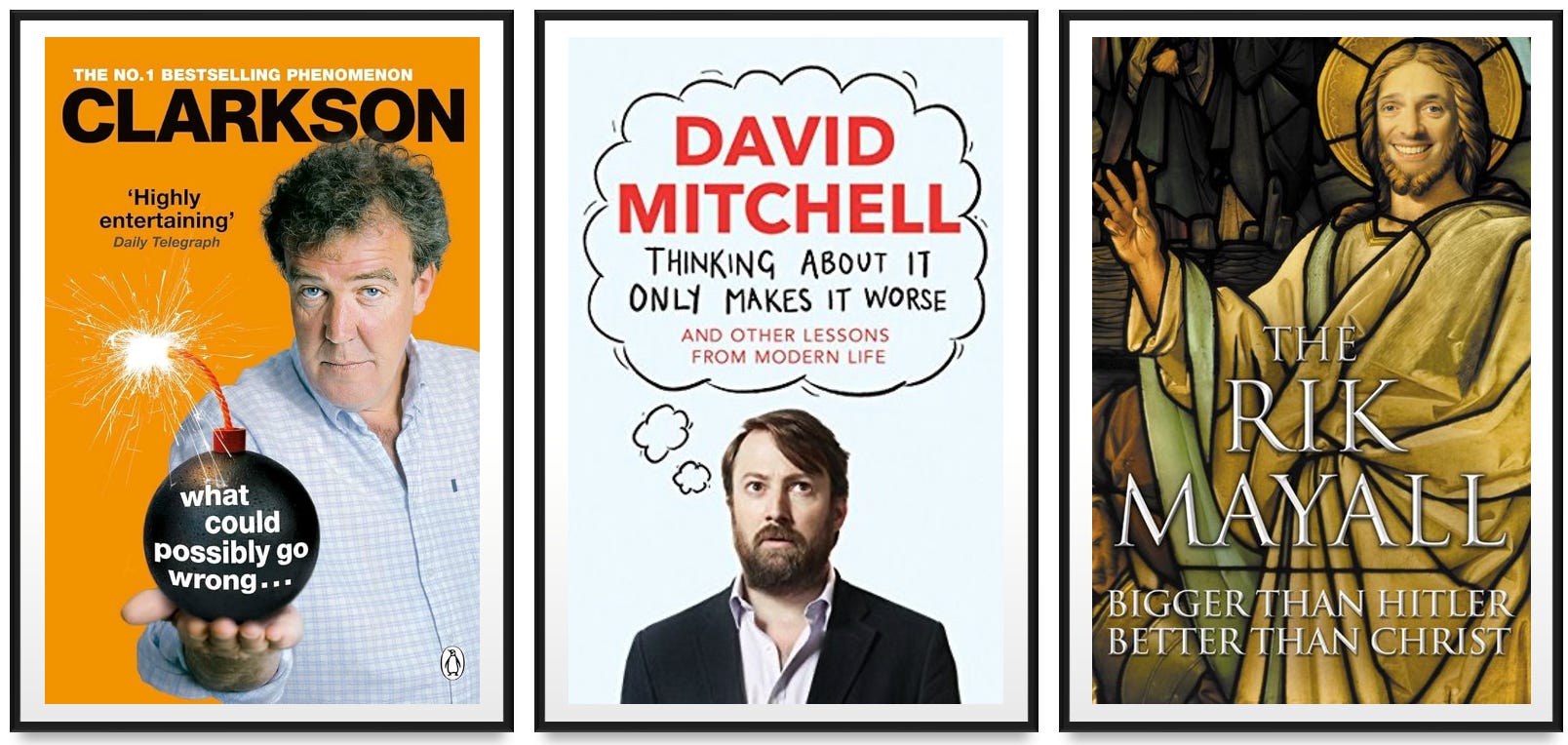
All of Jeremy Clarkson’s dubious ‘angry man’ ranty books of the early 2000s (now about his farm)
I have more of a pass for David Mitchell because I love him and his humour, and I’ve really loved his recent pivot to humorous history.
One of the best to ever do it, the much-missed Rik Mayall (and I am just now realising that possibly having a father who raised me on The Young Ones, and that there was a time when I rented Drop Dead Fred every week from the video-rental store, has partly informed my love of “lad pop culture”?)
The Litty Lad
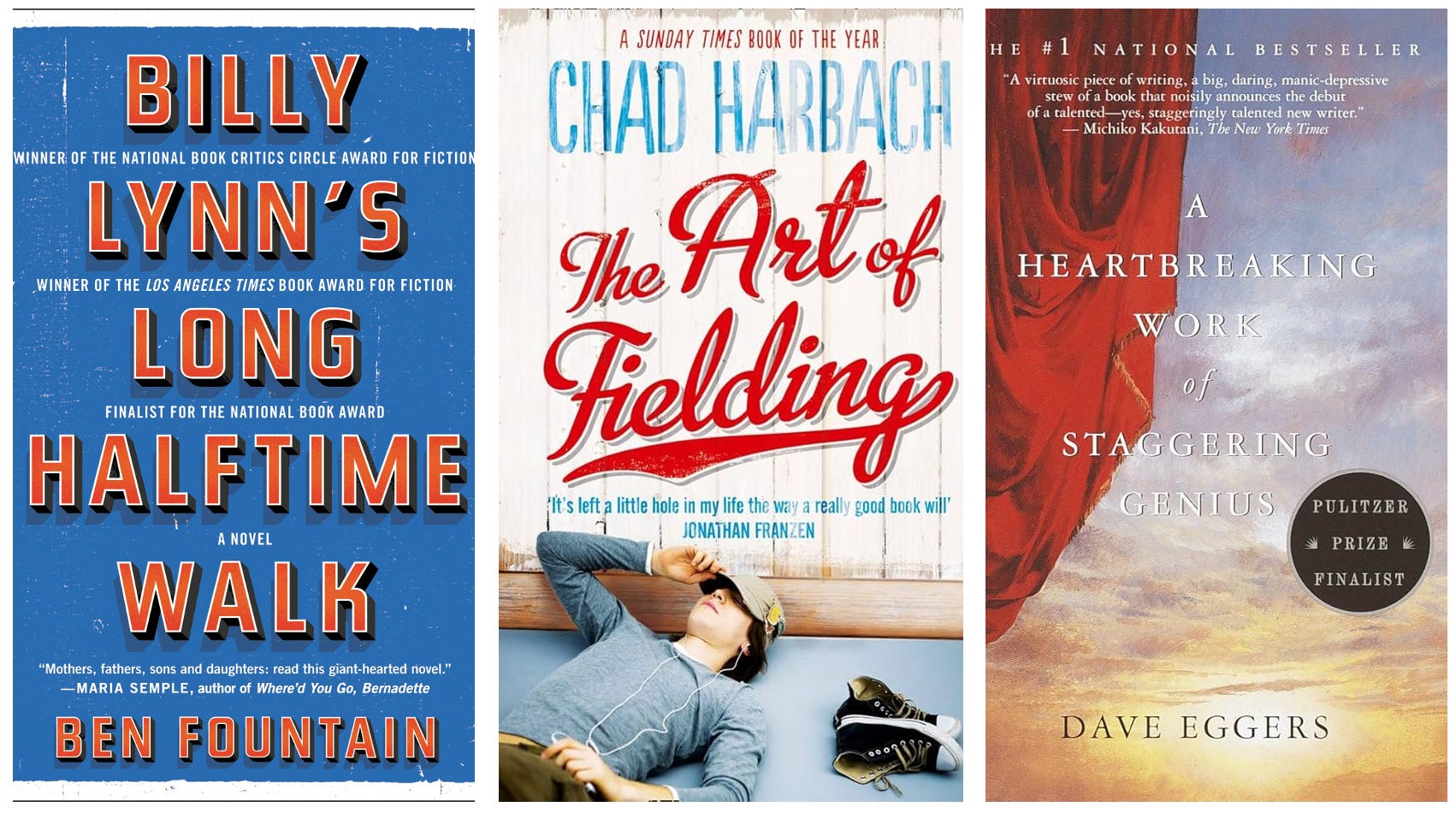
I’m willing to concede that in the mid-00’s, once the initial 90s-00s wave of original lad lit came and went, we got a slightly more robust and more literary variation … still emphasising men’s stories but this time grappling with something slightly more serious than break-ups and joblessness, or Peter Pan syndrome accusations.
These tended to be satirical novels about war, and PTSD - like Billy Lynn’s Long Halftime Walk by Ben Fountain.
Or about ambition and friendship through the lens of baseball, as in The Art of Fielding By Chad Harbach.
Maybe it did elevate things with narrative non-fiction lad lit too; with A Heartbreaking Work of Staggering Genius memoir by Dave Eggers - about how he navigated the stewardship of his younger brother, following the cancer-related deaths of their parents.
All of these - and many more - still had strong male voice and viewpoint, but they weren’t so commercial-fluffy and less inclined to focus on romantic machinations. They went a little deeper and while there was still humour it was less loud and brash; tending to a darker gallows-humour, or poignant reflection on life.
The New Lad Lit
Arguably lad lit never really went away, it just continued to evolve.
Previously during the 90s boom, the understanding of lad lit had also been very white, heteronormative and British. In the mid-2000s it became a little more serious, less naval-gazing and broadening into social commentary.
Nowadays I think there are hints of lad lit - but the scope is broader, and who is allowed under the umbrella is stretching too.
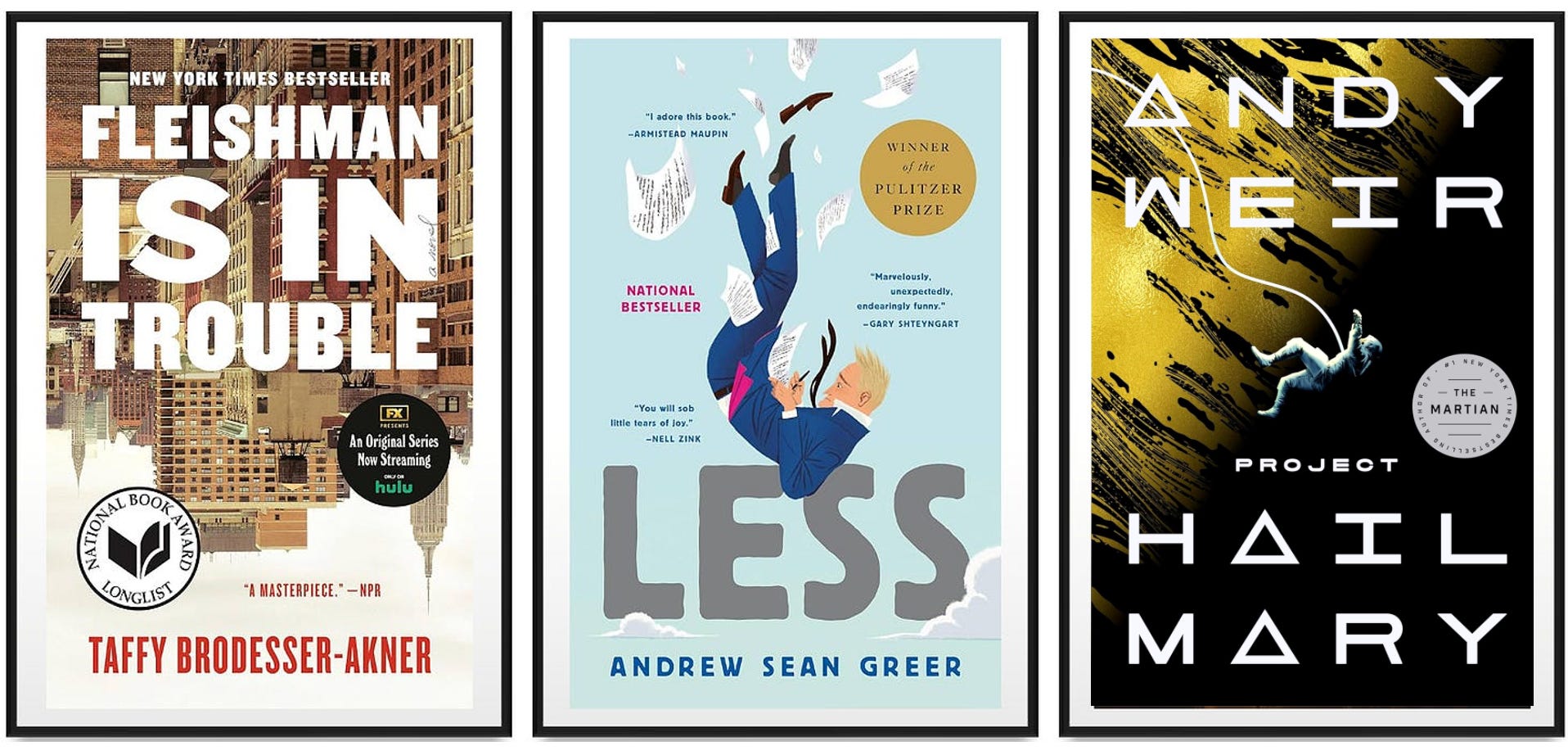
Fleishman Is in Trouble by Taffy Brodesser-Akner - a novel about Toby Fleishman navigating his post-divorce life, when his ex-wife seems to have disappeared. I loved this when I read it in 2020, and especially loved the way that Brodesser-Akner chose to centre a male protagonist in his 40s and write a very robust, masculine and introspective voice that is then flipped on its head in more ways than one … The New Yorker at the time said she had “turned the marriage novel inside out,” and I think that’s why I consider it as sitting comfortably in a new league of lad lit - written by a woman, and examining marriage from a few directions and a distinctive “lad” voice.
Less by Andrew Sean Greer - ‘The Pulitzer prize-winning novel about a failed writer trying to escape his problems by traveling abroad.’ I also adore this book - about a gay male novelist about to turn 50, and choosing to ignore the upcoming wedding of his ex by accepting invitations to some underwhelming literary events around the world. This has all the markers of lad lit - a man running from his romantic problems and professional failings with increasingly hilarious and poignant encounters - but the brilliance here is also his queerness, examining a very specific mid-life crisis as a creative and a gay man elevates this and expands the lad lit scope.
Project Hail Mary by Andy Weir - A science teacher wakes up alone on a spaceship. As his memory returns, he uncovers a mission to stop a mysterious substance killing Earth’s sun and that an unexpected friendship may be the key. Yes, science-fiction has often been staked out as a last literary refuge of “books for men” - to the exclusion of women, often times with disastrous real-world controversies. But I think Andy Weir’s books - The Martian previously, but especially his recently-adapted novel Project Hail Mary are showing a kinder side to science-fiction, and the male hero. That his protagonist is a school teacher learning to be a hero feels exactly like finding a lad lit angle in genre-fiction.
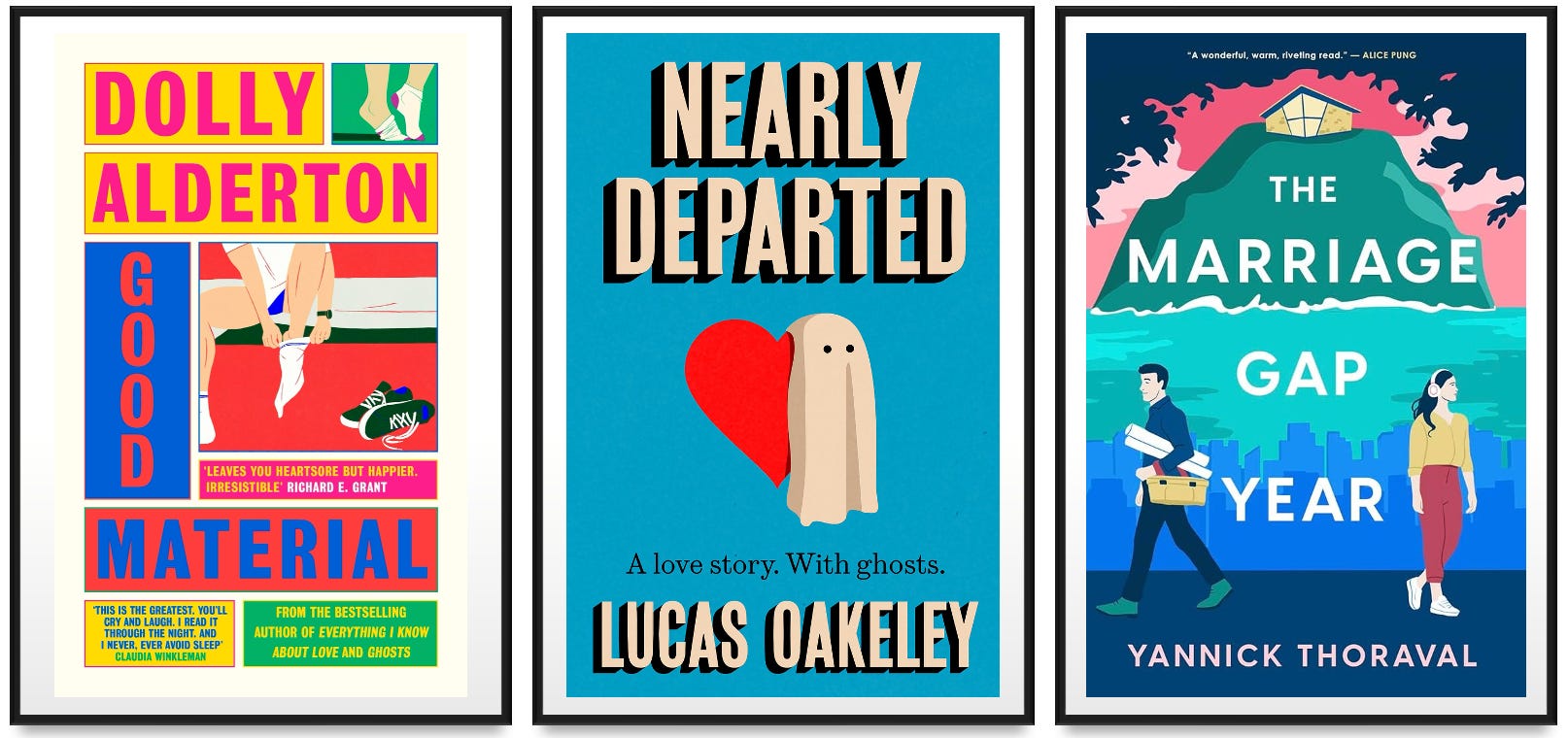
Good Material by Dolly Alderton - a man retraces the steps of his recent break-up, and in doing so realises he needs to start seeing things from his ex-girlfriend’s point of view. If I’m accepting that Taffy Brodesser-Akner can also have contributed to the new lad lit oeuvre, I think I can praise Alderton for having written a very robustly masculine POV rom-com that is especially brilliant because of her convincingly delving into the boyfriend’s side of things
Nearly Departed By Lucas Oakeley - ‘A feel-good, funny love story about grief, ghosts, and having a second shot at finding your soul mate.’ I particularly love that the author has specifically cited the phenomena of lad lit he had growing up, that made him fall in love with books and he’s trying to bring back some of those literary vibes in his own writing, and is even wondering if a new wave of these stories can address the current literacy crisis; “I’m aware that telling boys to pick up a copy of One Day isn’t going to fix an institutional crisis, but even if it’s on a minuscule scale, I think it can help.”
“I Grew Up Wanting Models of Male Vulnerability, So I Became One” – Lucas Oakeley On Why More Men Need To Read (& Write) About Love
The Marriage Gap Year by Yannick Thoraval - ‘Will their marriage survive a year apart? Find out in this sparkling novel set in bustling Melbourne and the sparkling beaches of San Remo, where love, friendship, and the search for happiness collide.’ This one is self-published, but it’s very self-referentially delving into this new wave of lad lit and if you enjoyed Dolly Alderton’s book, and After I Do by Taylor Jenkins Reid - you’ll enjoy this one too.
Lad Lit in YA
I think Lucas Oakley was onto something in his op-ed;
In a world where men are becoming increasingly distant and hostile to just about everyone around them, I think the power of fiction to bring people together – even if it’s shifting them nothing more than a few centimetres closer to being on the same page – shouldn’t be underestimated. Everyone falls in love. All I hope is that more men can fall in love with reading about it.
No wonder then, that a place where “lad lit” has continued to thrive is in YA - always about coming-of-age in some way or another, often with romantic elements and core focus on friendship and family life.
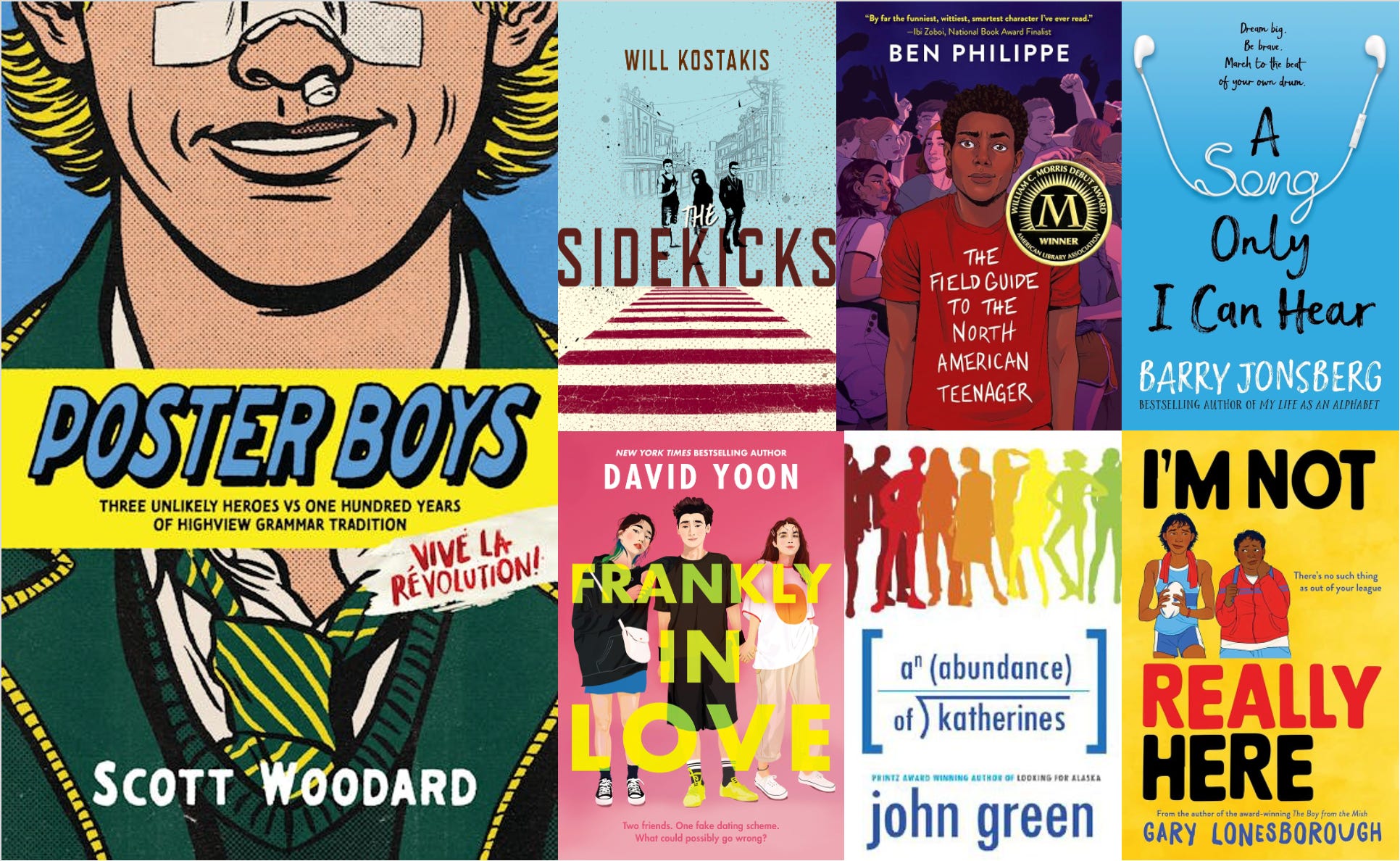
There are so many to choose from, this is but a snapshot of books that I think have all the markers of “lad lit” - voice-led, humorous hooks, some cringe-humour and big life-lessons abounding … that these are all written by men but also enjoyed by young female readers I think is further proof that there’s more that unites us than separates us when it comes to such stories;
Poster Boys by Scott Woodard - fair call; this is one of my authors I rep as literary agent, but I truly do adore this book! About a group of boys at an all-boy’s school learning about revolution in history class and deciding to replicate it in their school community.
The Sidekicks by Will Kostakis
The Field Guide to the North American Teenager By Ben Philippe
A Song Only I Can Hear by Barry Jonsberg
Frankly in Love by David Yoon
An Abundance of Katherines by John Green
I’m Not Really Here by Gary Lonesborough
The Lack of Diversity

I genuinely do think we’re about to see another wave of lad lit in publishing - and Bill Lawrence supremacy continuing across television too. And I think there’s a case to be made that some narrative non-fiction, genre-fiction and fiction written by women that falls under this new umbrella of modern-day lad lit … but all that being said; this is still not a terribly inclusive trend.
I was trying to think of diverse literature and pop-culture that fits the description of “lad lit” - male perspective, humour, coming-of-age, life trials and tribulations … and I could really only think of three (please let me know in comments if you have others);
Stay True by Hua Hsu - ‘A deeply moving memoir about growing up in the 90s, written in the wake of the senseless killing of a beloved friend.’ Another non-fiction memoir, and one I absolutely loved. It’s an homage to the 90s, male friendship and has almost Stand By Me connection for Hsu reflecting on his history with Ken, a best friend now deceased. It’s rich and evocative on so many levels; not least for Hsu’s examination of trying to fit into America, as a son of Taiwanese immigrants - and that crucial lad lit connection of examining familial lines and his relationship to his father especially.
Love Life season 2 - the first season of this show centred on a character played by Anna Kendrick, and was a fresh take on the romantic comedy, observing the journey from first love to lasting. In season 2 however, it became an anthology series and switched up the focus to a new character - Marcus Watkins played by William Jackson Harper. Same as the first season, it was observing his romantic journey - as a book editor in his 30s, navigating a divorce and attempting to rebuild his life and love life in New York. The first season was good, but as Grazia magazine declared - the anthology switch-up for season 2 made the series great. And especially because Jessica Williams (before her star turn in Shrinking) also appears as a love-interest. This show focusing on a black man in New York City navigating the up’s and down’s of his love-life was just brilliant; funny, tender, and still stands as unique in the genre, and makes me wish for more.
Blindspotting, written by Rafael Casal and Daveed Diggs - ‘As Miles, Ashley’s partner of 12 years and father of their son, is suddenly incarcerated, she is left to navigate a chaotic and humorous existential crisis when she’s forced to move in with Miles’ mother and half-sister.’ This one also stood out for me, since I knew it was written by Casal and Diggs and it was examining a different dimension to fatherhood - during incarceration, but doing so in a very caring, humorous and interesting, sometimes fabulist way. It also occurred to me that it was portraying an equally revolutionary part of parenting for millions of families. I’m sad it only got two seasons, because I thought the family-dynamics and parenthood behind bars being explored was truly incredible.
I think this is the space where lad lit still has room to crack more stories open … introspective, romantic, humorous stories of men from more diverse walks of life navigating relationships, workplaces, and family dynamics - on our screens and between the pages of books. That’s what I’d love to see in this new iteration of the sub-genre.
Fantastic article Danielle! It made me think of Trent Dalton’s Gravity Let Me Go which is about a ‘sad’ middle-aged man grappling with a disconnection from his family- which I think would be perfect for the big screen!
Such a good article thank you. You keep opening my reading eyes to new books and genres which I'm really thankful. Just placed an order for Nearly Departed and have a few others on hold at my local library.